Explore some of the loveliest towns and villages around Dordogne.
Find loads of top tips and local insights in our Dordogne Destinations Guide.
Discover the top Dordogne towns and villages
Explore some of the loveliest towns and villages around Dordogne.
Find loads of top tips and local insights in our Dordogne Destinations Guide.

A medieval Bastide town on the eastern border of the Gironde and Dordogne
Sainte-Foy-la-Grande sits on the south bank of the Dordogne river. This attractive walled bastide town still has some of its medieval houses and is a good base for visiting the surrounding Sainte-Foy-Bordeaux wine region and nearby Château de Montaigne, home of Michel de Montaigne.

A pretty hill top village where the Dordogne river meets the Vézère river
Limeuil is a picturesque old village which features on the list of 'Les Plus Beaux Villages de France'. It has a pretty park on the top of the hill and some ruins from its medieval past.

The first English bastide town and an important historical military site
Founded in 1261, Lalinde was the first English bastide. Situated on the banks of the Dorgdogne, the town is also crossed by the Canal de Lalinde, constructed to bypass the dangerous rapids of Grand Thoret.

Situated at the confluence of the rivers Garonne and Tarn at the Canal de Garonne
The main town of the area between 1800 and 1926, it was all but destroyed during the floods of 1930, which caused devastation across the entire south west of France and counted as a 100 year flood.

Sitting on the La Bave river, boasting cobbled streets and a Chateau in the east of the Dordogne
The riverside town of Saint-Céré is a lovely place to base yourself for excursions in the region. The La Bave river winds its way through the centre of the town and its old buildings have been carefully restored, retaining their timber vaulting or Renaissance stonework.

Lively market town and the site of the last battle of the Hundred Years' War in 1453
You get a sense of this town's history as soon as you arrive, with are flags and coats of arms lining the roads that lead you to the main square.
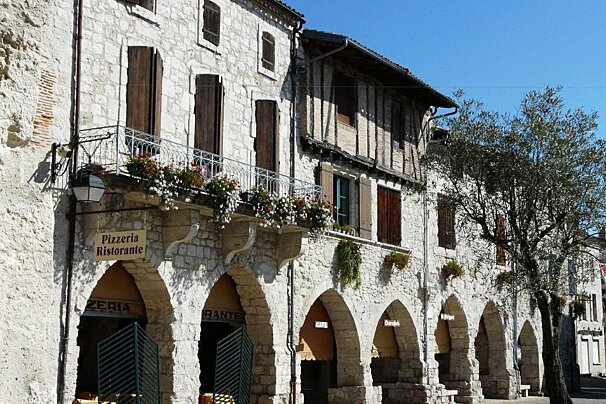
Very popular Bastide town to the south of Bergerac in the Perigord
Very much a textbook bastide village, it's laid out in a grid fashion around a central square. Eymet, as it exists today, was founded by Alphonse de Poitiers in 1270.

Pretty medieval town in the Lot region to the east of Dordogne
The town of Martel is not, in fact, famous for the brandy (that's Martell with two ll's) but is well known as the capital of truffles and a great producer of walnuts, two of the region's specialities.

Charming village set amongst the green fields and vineyards of Bergerac
Trémolat was originally home to a 6th century hermit, Saint-Cybard, before monks built their monastery here in the 9th century.

Clifftop medieval village and pilgrimage site in the Lot region
Perched on the side of a cliff, in a gorge above the river Alzou, this medieval town has a breathtaking setting.

Sitting on the Dordogne and Couze rivers, east of Bergerac
Couze used to be a paper-making village and a number of its old mills are still in existence, using the power of the Couze river to turn the water wheel.

Relaxed market town situated in the heart of one of the most visited areas in France
The relaxed town of Le Bugue sits on the river Vézère where it's joined by the Doux. A more tranquil base for exploring the region, it has some pretty, narrow streets and a bustling market twice a week.
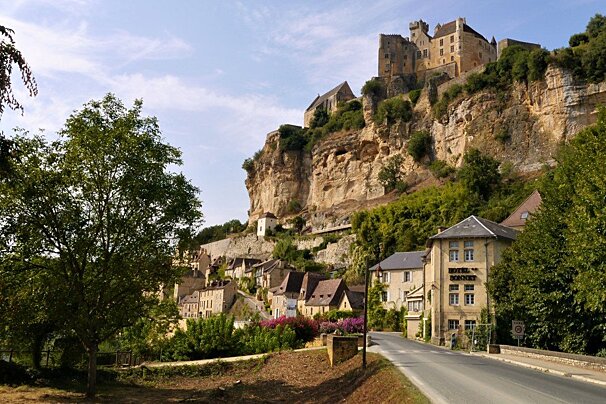
Beautiful village close to the eastern border of Dordogne and the Lot
The village of Beynac-et-Cazenac is thought to date back to the 12th century when its imposing cliff top château was constructed.

On the Upper Dordogne this town sits on the border of the Lot and Correze regions
This medieval town on a bend in the Dordogne grew around its 9th century Benedictine abbey of Saint-Pierre.

East of Bergerac and south of Siorac-en-Perigord lies the town of Belvès
Sitting proud on a rocky outcrop overlooking the Nauze valley, this fortified town boasts seven bell towers and an 11th century keep that is still standing, despite numerous invasions and wars.

Pretty village steeped in history and culture situated to the east of the Dordogne in Lot
Carennac has been previously voted 'One of the 'Most Beautiful Villages in France' and it's easy to see why. The blonde stone and red-brown roofs of its buildings have tall chimneys and are adorned with creepers that turn red in the autumn.
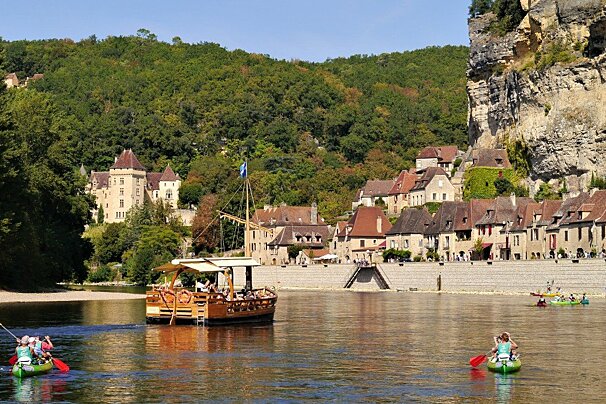
Nestled between a cliff face and the north bank of the Dordogne river
It's hard to imagine a nicer village than La Roque-Gageac, with its huge limestone cliffs that tower behind the Renaissance-style houses built in creamy stone with burnt red roofs.

Famous for being home to the amazing prehistoric Lascaux Caves
The pretty old town of Montignac serves as a good base for visiting the nearby prehistoric caves.