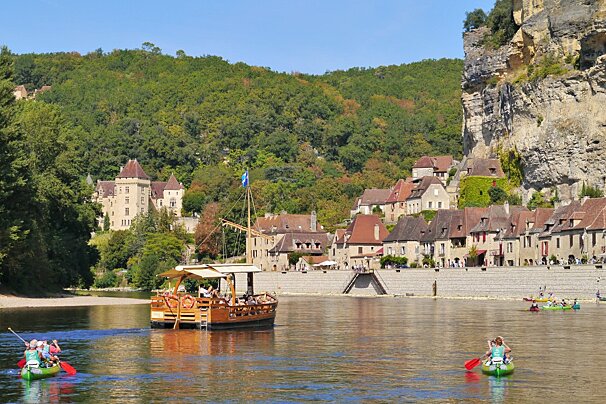
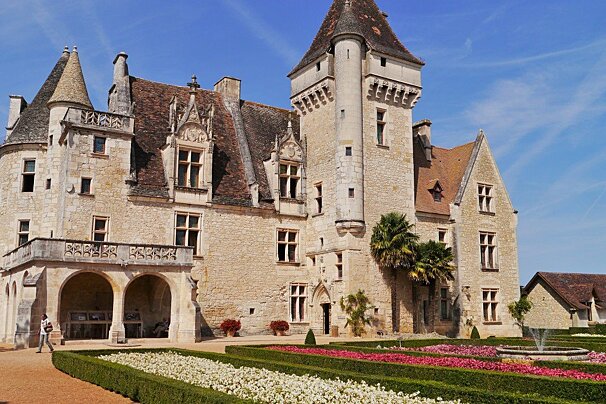
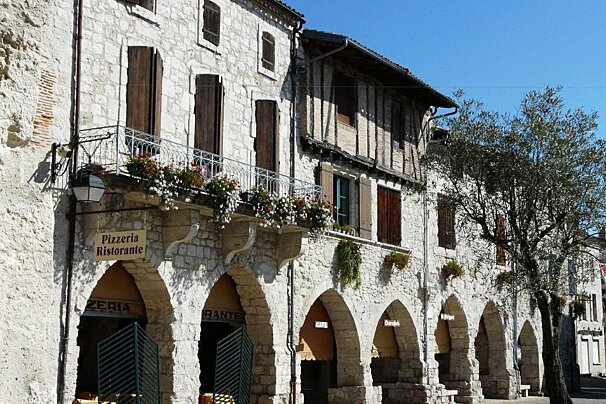
This city has some wonderful examples of Medieval and Renaissance architecture. With its attractive old centre, located on the pilgrimage route to Santiago de Compostela, the 12th century cathedral should be visited and its narrow streets explored.

Perigueux Guide
Discover the city of Perigueux
The only main city that the L'Isle river flows through, Périgueux has a compact and mostly pedestrianised centre, filled with alleyways and narrow streets that form the main part of town on the west bank of the river.
Events in Perigueux
As well as the usual weekly and daily markets, the beautiful old town also hosts the 'Marchés au gras' during the winter months, showcasing the local specialities such as foie gras, canard, pâté de Périgueux and truffles.
Events in Perigueux
See all Events in Perigueux-

Beaujolais Nouveau
The new Beaujolais has arrived!
The third Thursday in November is when this year's Beaujolais hits the shelves and is cause for celebration across France.
-

Fête de la Musique
Music festival celebrated across France on the summer solstice
The Fête de la Musique is a celebration that takes place every summer solstice on 21 June in cities, towns and villages across France.


History & Culture in Perigueux

Built upon the site of the former Roman city, Civitas Petrocoriorum which flourished during the Roman occupation of Aquitaine in the first centuries AD, Périgueux is a compact but impressive city.
As Christianity grew throughout the region, a monastery and a church were built on the hill (called le Puy Saint Front) near to the Roman city. In the 12th and 13th centuries these old religious buildings were replaced by a Romanesque style basilica. The new church became not only a stop for the pilgrims on their route to Compostela, but also the centre of a thriving town - called Ville du Puy-Saint-Front - that formed around.
In 1240 the Roman city and the Ville du Puy-Saint-Front united to form Périgueux. During the Hundred Years' Wars (1337-1453 between the Kings of France and the Kings of England) Périgueux town was loyal to the French King while its Earl became an ally of the King of England. As a result he was stripped of his title and the county was given to the Duke of Orleans, the brother of Charles VI, the King of France.
On the Saint Front Hill is situated the medieval town with its many narrow streets, and of course the Saint Front Cathedral.
Amongst the more unusual stories of Périgueux is that of actress Simone Mareuil. The French actress who was best known for appearing in the surrealist film Un Chien Andalou (1929), was born in Périgueux in 1903. She was the second wife of actor Philippe Hersent. After World War II, she returned to her home town of Périgueux, where she fell into a deep depression and later committed suicide by self-immolation — dousing herself in gasoline and burning herself to death in a public square.
Sights & Attractions in Perigueux

All the sights are within easy walking distance in this pleasant town as many of the main attractions are within the old town, or La Cité as it's known. You will find an abundance of Roman ruins and wonderful museums that will give you a glimpse of life through the ages in Périgueux. There are also several grand churches to visit, including the rather majestic Cathédrale Saint-Front, which is certainly an impressive sight from the outside, even if you do not wish to venture in.
Sights in Perigueux
See all Sights in Perigueux-

Musee d'Art et Archeologie
Prehistoric collection at the museum of art and archaeology
The museum of art and archaeology houses an excellent prehistoric selection of findings and skeletons from the region.
-

Vesunna Gallo-Roman Museum, Perigueux
Museum on the site of the remains of a 2,000 year-old Roman mansion
This glass museum designed by Jean Nouvel is located on the site of a Roman mansion discovered accidentally in the late 1950s. The remains of this huge villa are impressive and include murals dating back to the 1st century.
-

Eglise Saint-Etienne-de-la-Cite, Perigueux
The first Roman Catholic cathedral of Périgueux
Built in La Cité, this cathedral was the main cathedral in Périgueux until the mid 17th century.
-

Jardin des Arenes
Remains of the largest Roman amphitheatre in the Gaul region
These gardens are home to the remaining elements of the vast Roman amphitheatre which housed over 20,000 people in the 1st and 2nd centuries.
-

Cathedrale Saint-Front, Perigueux
Romanesque & Byzantine style cathedral in the heart of Perigueux
This Roman Catholic cathedral in the heart of Périgueux's old town is named after the first bishop of Périgueux.
-

La Cite (Vesunna), Perigueux
Old Roman town in the heart of the city of Périgueux
Today there are only a few remaining elements of the old Roman town which was located at Périgueux.


Dining in Perigueux
Restaurants in Perigueux
See all Restaurants in Perigueux-

Auberge de la Truffe Restaurant, Sorges
Truffle extravaganza in Sorges
Located in the world capital of the truffle, at this small hotel, the truffle has become the main feature.
-

Moulin de l'Abbaye Restaurant, Brantome
Michelin-starred romantic waterside gastronomy
Within the hotel grounds of the picture perfect Moulin de l'Abbaye hotel, set alongside the River Dronne and with a dining room oozing class and a waterside terrace with shaded trees, it would be difficult to find a spot in the world more idyllic than this!
-

Hostellerie Du Perigord Vert Restaurant, Brantome
Produce that sings in this fine Brantome restaurant
Set in an inviting tranquil hotel just a short distance from the centre of medieval Brantome. A meal typical of the region including duck, foie gras and of course truffles can be enjoyed in the spacious restaurant or under the mulberry trees on the terrace in the summer.
-

La Metairie Restaurant, Mauzac
A discovery of the Perigord & its world famous cuisine
Set in the hotel's 19th Century building, the dining room has wonderful stone walls and comforting, traditional table settings. Weather permitting, you may be able to relish your meal outside on the flowery terrace overlooking the lush garden or even down by the pool.
-

La Source Restaurant, Tursac
Good vegetarian options at this village restaurant
Sitting wonderfully on the central square in Tursac, this great little restaurant has an attractive garden in which to enjoy their traditional but imaginative fare. There is a good vegetarian selection and a full vegetarian set menu available if you let them know in advance.
-

Les Glycines Restaurant, Les Eyzies-de-Tayac
Exemplary hotel restaurant which once served Prince Charles
With their very own garden, the restaurant has access to the freshest fruit, vegetables, edible flowers and herbs. This is reflected in the menu, which makes the most of the regions famous culinary delights, including foie gras and of course Perigords black diamond, the truffle. You will easily settle into the cosy, contemporary restaurant or get to enjoy your surroundings while dining out on the terrace.


Things to do in Perigueux

As with many towns in the Dordogne and Bordeaux regions, you will find a 'Petit Train' that will take you round the main tourist attractions and help you orientate yourself in the area. This is especially good for those with younger children...train journeys are always a treat!
For another type of 'train' you could try the Velorail du Perigord Vert near Thiviers to the north east. A fun way to travel through the countryside under your own steam...or pedal power anyway. There are plenty of walking and cycling trails to follow all through this beautiful region, and both are a great way to further afield. One thing not to be missed however, is a canoe along the river, or the 'Voie Bleue' as it is known. This is possibly the most tranquil way to travel past Perigueux and venture along to the neighbouring towns.
Things To Do in Perigueux
See all Things To Do in Perigueux-

Le Petit Train de Perigueux
Guided sightseeing of Perigueux in le Petit Train
Discover the art and history of the city of Perigueux, exploring the ancient city, old town and admiring the beauty.

Cycling in Perigueux
Cycling Routes in Dordogne
See all Cycling Routes in Dordogne-

La Voie Verte, Perigueux
A wonderful 'Green Way' for walkers, cyclists and inline skaters
A 23km trail that follows the Isle river through the Perigord countryside from Trelissac (Charrieras) to Marsac (La Roche).
-

Greenway (Voie Verte) of Lalinde Canal, Lalinde
A 9km stretch of Voie Verte (greenway) along the Lalinde canal
This short stretch of Voie Verte (greenway) is perfect for families looking to stretch their legs in the Dordogne countryside, without having to conquer any hills climbs.
-

Old Railway Greenway (Voie Verte) Route, Sarlat-la-Caneda
Pleasant cycle through the Dordogne countryside to the Lot region
This Voie Verte (greenway) has been created along the track of an old and now unused railway line.
-

Circular route between Ouysse & Causse, Rocamadour
Allow at least 3hrs for this intermediate circular route
Although just 25km this circular route from Rocamadour does cross some challenging terrain. Partly on river path and some parts on road, you will need to have some experience of cycling to enjoy this route fully.


Hiking in Perigueux
Walking Routes in Dordogne
See all Walking Routes in Dordogne-
La Voie Verte, Perigueux
A wonderful 'Green Way' for walkers, cyclists and inline skaters
A 23km trail that follows the Isle river through the Perigord countryside from Trelissac (Charrieras) to Marsac (La Roche).
-

Font-Blanque Loop, Lalinde
An easy walk with a few short steep sections in the countryside of Lalinde
Following part of the GR6 route through the Dordogne this walk takes you from Lalinde on a circular route through the surrounding countryside.
-

Cirque d'Autoire circular route, Autoire
Short circular walk to waterfall with the possibility of a steep section
This walk is wonderful and relaxing way to explore the valley of Autoire and the horseshoe shaped cliff band that guards it to the south-west.
-

A Short Walk up Mont Saint Cyr, Cahors
Short but steep this walks leads from the town of Cahors to Le Mont Saint Cyr
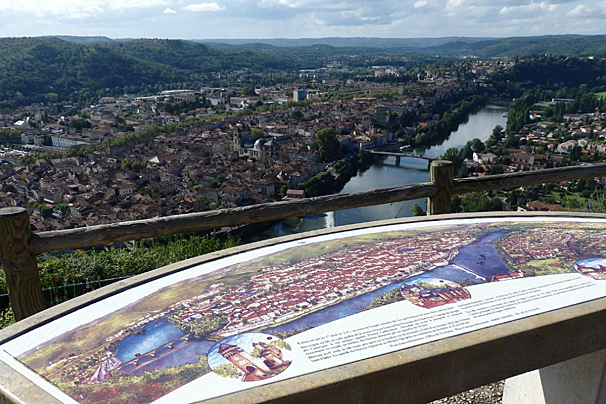
With stunning views over the Lot river and the town of Cahors this walk is worth it just to enjoy the views.
-

Chemin de Halage
Walk along the towpath cut out of the cliff
Part of a long distance towpath, there is an interesting section cut out of the rocky cliff face between Bouziès and Saint-Cirq Lapopie which was used to drag barges along the river Lot. It's about five kilometres between the two villages and is a stunning section of the river.


Watersports in Perigueux
Watersports in Perigueux
See all Watersports in Perigueux-

Brantome Canoe, Brantome
Discover the Dronne river by canoe, paddle board or try something completely different!
Not only can you take a relaxing journey down the Dronne river in a canoe but you can try your hand at stand up paddle boarding or take to the cliffs and trees for some adventure above ground.
-

CANOEric, Le Bugue
Canoeing and kayaking down the Vereze valley in the heart of the Dordogne
Easy canoeing for everybody. You can navigate with family or friends in peace. You’ll be given a solid equipment, stable canoes and buoyancy aids.
-

AVCK (Animation Vezere Canoe Kayak), Les Eyzies-de-Tayac
Explore the Vézère valley from the peace & tranquillity of the river
This area provides water-sports for all ages. Renowned for its architectural heritage and sites of natural beauty, you will find that paddling is a great way to relax and have fun whilst enjoying the scenery.
-

Canoes Rivieres Loisirs, Limeuil
Accessible to all, you can travel the region at your own pace
With family, in a group, with friends and at any age, you can explore at your own pace two of the most beautiful rivers of Périgord.
-

Canoe Dordogne
Enjoy a gentle kayak down the river Dordogne from La Roque Gageac
Hire a canoe or kayak from this company and you can enjoy a gentle river cruise and the chance to explore the wonderful Dordogne river and its banks.
-

Canoe Vacances, La Roque-Gageac
Canoe holidays on the river Dordogne
Enjoy a single or multi-day trip down the river Dordogne to town such as Beynac, Castelnaud, Montfort and Fayac.


Holiday Rentals in Perigueux
Holiday Rentals in Perigueux
See all Holiday Rentals in Perigueux-

Le Mazet Villa
1 bedroom villa in Dordogne, sleeps 2
Charming renovated detached cottage in the heart of Dordogne.
-

Le Mas & Le Mazet Villas
6 bedroom villa in Dordogne. Sleeps 12
A combination of two renovated villas in the heart of Dordogne.
-
Le Mas Villa
5 bedroom villa in Dordogne. Sleeps 10
Renovated 16th century farmhouse in Dordogne.
-

Le Manoir Du Vignoble Villa, Pomport
5 bedroom Villa in Dordogne. Sleeps 14
A beautiful property owned by a local viticulturist whose vineyards form part of the grounds around the house.
-

La Castille Villa, Castillonnès
5 bedroom Villa in Dordogne. Sleeps 8
Enjoy French country living at La Castille, a beautifully restored 18th Century stone bastide which offers charm and style in abundance, in an area renowned for delicious food and wine. La Castille is the sister property to La Perigourdine and La Petite Maison.
-

La Petite Maison Villa, Castillonnès
2 bedroom Villa in Dordogne. Sleeps 5
Decorated in chic but subtle style this pretty cream coloured stone cottage is the epitome of a charming rural retreat yet is within walking distance of the impressive bastide of Castillonnes.


Hotels in Perigueux
Hotels in Perigueux
See all Hotels in Perigueux-

Le Mas des Bories Hotel, Antonne et Trigonant
Restored 16th Century Castle farm house
Recently renovated, the old farm has been given a new lease of life. Preserving its original charm with exposed wooden beams, mullioned windows, exposed fireplaces and tasteful decoration, the hotel is a truly comforting prospect.