Chateau de Belves, Belves
Treat yourself to an intriguing discovery with this intimate and charming medieval castle. Walk in the garden and enjoy unforgettable views of the Nauze valley.
Discover and book the top Dordogne sights
Treat yourself to an intriguing discovery with this intimate and charming medieval castle. Walk in the garden and enjoy unforgettable views of the Nauze valley.
Although it is believed to have dated back to the eighth century, Father Goustat wrote in 1883 that this building could date back to VIII, XI or even the fourteenth century. It has been repeatedly destroyed and rebuilt in part or in whole over the years.
The most famous cave in Europe the Gouffre de Padirac is also considered to be one of the most important and interesting geological sites in France.
The largest cave in the Périgord region, close to the pretty and tranquil town of Le Bugue. Proumeyssac has a vast subterranean grotto reaching 40 metres in height.
These caves were originally discovered in 1825 and house some impressively large stalagmite pillars reaching up to 10 metres in height and varying in colour.
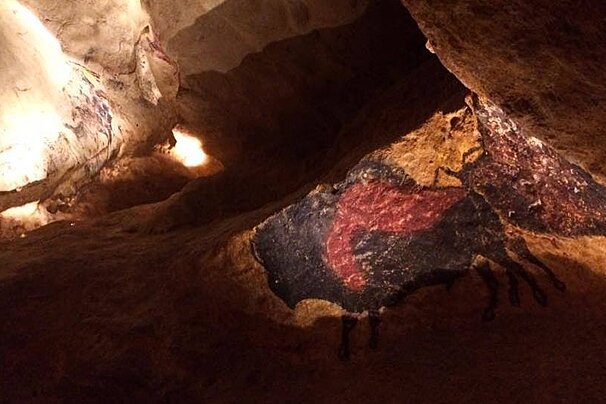
Now you can come and discover the famous decorated cave near Montignac in its entirety. But that’s not all; the opening of the International Centre for Cave Art marks the beginning of a new adventure combining the emotion of ancestral art and an important technological achievement.
Spread over three levels this museums tells many stories of resistance efforts, concentration camps and the part the Cahors played in the liberation of France.
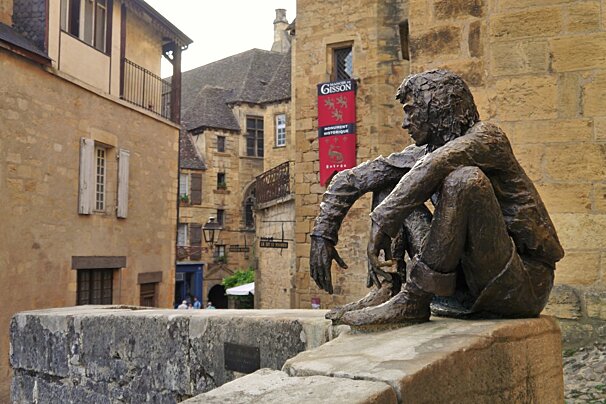
With mullioned windows, dark grey stone slate roof (lauze) and the well-known honey-coloured stone of the facade, this is one of the most remarkable buildings in Sarlat.
Situated between Sarlat and Les Eyzies-de-Tayac-Sireuil this thirteenth-century castle was renovated as recently as 1890.
Self-titled as the "Unfinished Louvre in Périgord", this château combines medieval fortifications with an incomplete Renaissance palace.
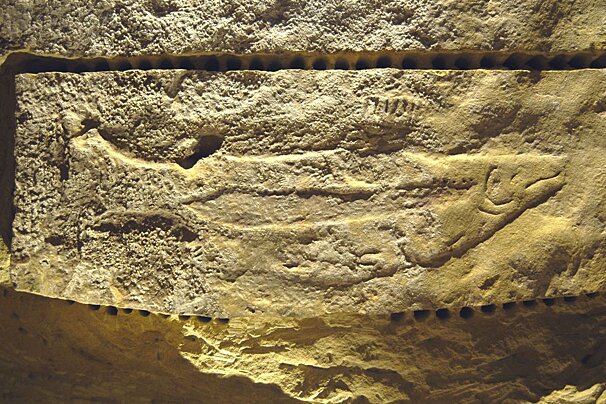
The southernmost of all the caves of the Vézère valley, Bara-Bahau was classified as an historic monument in 1961.
The monks originally lived just outside Saint-Emilion, but in 1338 they obtained permission from the Pope to establish a monastery within the walls. The cloister was built in the 14th-century.
Learn more about making liqueurs in this traditional distillery.
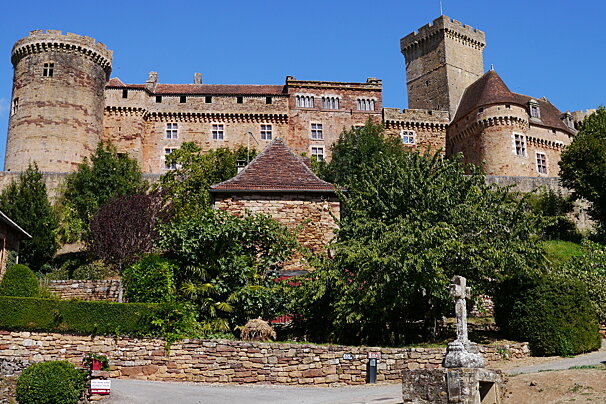
The present castle dates to 1530 when it was built by the Herm family. Its Gothic style consists of a rectangular main building flanked by two round towers.
In the paper-making village of Couze-et-Saint-Front, this traditional mill still makes paper by hand.
The museum of art and archaeology houses an excellent prehistoric selection of findings and skeletons from the region.
The Wine Centre (Maison des Vins) is right in the historic heart of Bergerac, in the Récollets Cloisters, a magnificent group of monastic buildings from the 17th-century.
This fabulously preserved cliff top château overlooks the town of Beynac and the river Dordogne. It was built as a fortress in the 12th century with the cliff on one side and double walls and moats on the other.