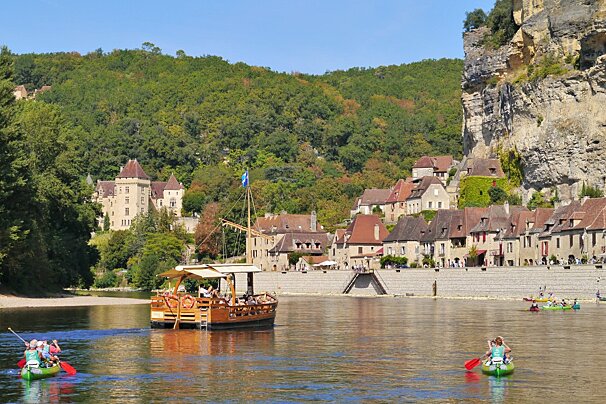
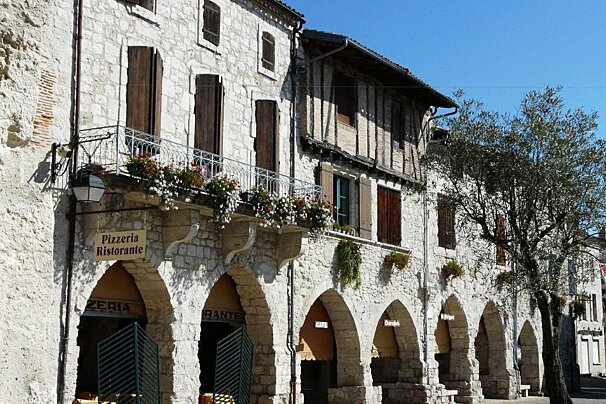
The Heritage Centre offers a complete insight into the region's traditions and ways of life. Wandering through the narrow streets offers a wonderful view into rural French life, with local residents, cats and chickens enjoying the peace and tranquility of the town.
This site on the banks of the Dordogne river has been occupied since the Gallo-Roman period, but it wasn't until the Abbey of Cluny founded priory here in 1047 that it became known. The priory dates from the 11th century, though the buildings which remain today date from the 15th century. Part of the abbey fortifications, the Romanesque Eglise Saint-Pierre, has impressive preserved cloisters and a 15th century preserved Entombment of Christ.
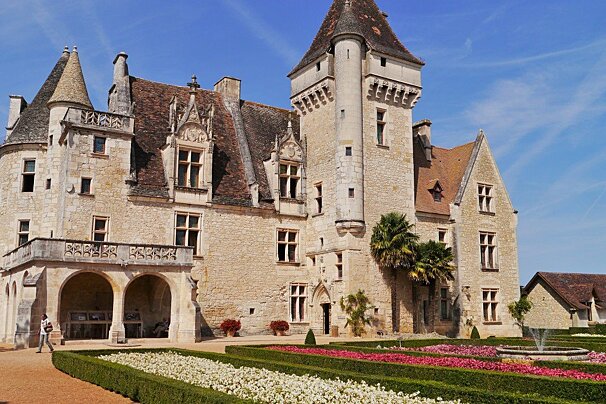
After a long period of prosperity, the monastic town was ravaged by the Hundred Years' War and rebuilt in the late 15th-century. The village then joined the new art of the Renaissance and the Deans Castle was built along the north side of the church. The castle now houses the Country of Art and History.