Cave de Monbazillac
Founded in 1940, the Monbazillac Cellars encompass around one hundred vine-growers who account for around a third of the area entitled to use the Monbazillac appellation name.
Discover & book the top Dordogne vineyards and estates
Sharing the same Atlantic influence as neighbouring Bordeaux, the Bergerac and Dordogne river region produce some very fine Cabernet Sauvignon, Merlot and Bordeaux blends.
Find loads of top tips and local insights in our Dordogne Wine Guide.
Founded in 1940, the Monbazillac Cellars encompass around one hundred vine-growers who account for around a third of the area entitled to use the Monbazillac appellation name.
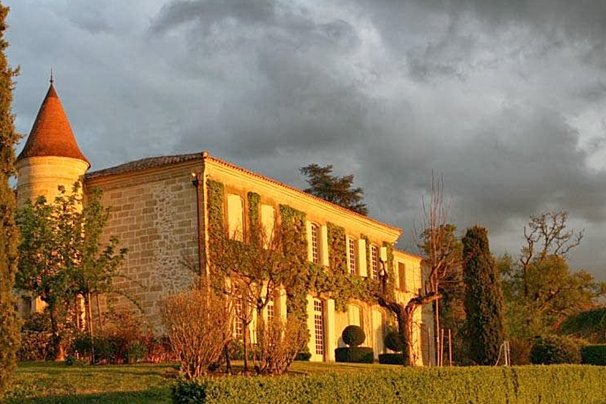
Their 22-hectares vineyard produce a Saint Emilion Premier Grand Cru Classé as well as a second red wine. The chateau, at the centre of the estate, has features dating back to the 15th century and up to the 20th.
Having bought the vineyard of Chateau du Haut Pezaud in 1999, Christine Borgers has undertaken some major modernisation work.
This estate is closely related to the history if the town of Saint Emilion since, nowadays, the hermitage where the saint lived in the 8th century, as well as the 13th-century chapel built there and the catacombs belong to Chateau Laniote.
This stunning 15th century château has had vineyards since the late Middle Ages and today over 60 hectares are dedicated to the growth of grapes, all harvested by hand.
This domaine has over 35 hectares of hilly south-facing vineyards which are densely planted.
This estate has 20 hectares of vineyards where Merlot, Cabernet Franc and Cabernet Sauvignon grape varieties grow. They produce one of the leading Premier Grand Cru Classé B Saint Emilion wines, together with a second and a third red wine.
Over the last five generations, going right back to the middle of the nineteenth century, there have been vines – as well as cereal crops and dairy cows – on this small family-owned property.
Located a hundred kilometres east of Bordeaux, the Pécharmant vineyard in considered among the best of the Périgord wines.
Producers of Grand Cru Classé wines, this chateau is a combination of history and modernity. Its existence can be traced back to the end of the 17th century, but they have recently added a new cellar to its estate created by prestigious architect Jean Nouvel.
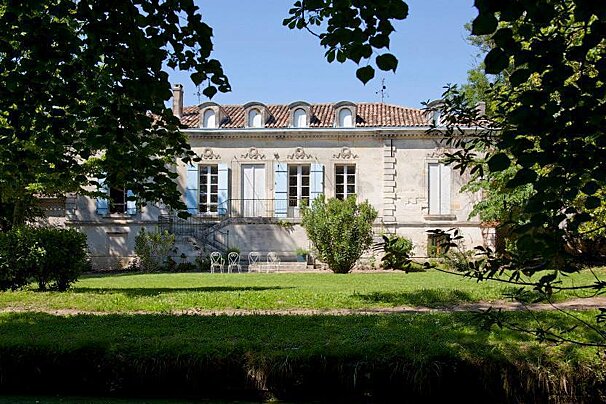
Located in the heart of Saint Emilion in a beautiful townhouse, this estate produces a Grand Cru Classé with an organic qualification since 2012.
This winery is situated within a grand 19th-century cellar in a magical spot on the banks of the Dordogne in Castillon-la-Bataille, just a stone’s throw from the medieval town of Saint-Émilion.
The wine produced on the lands of this château gained critical acclaim as early as the 4th century, when it was reputedly famous in Rome.
Located in the heart of the famous Saint Emilion appellation, this chateau has 33 hectares where Merlot, Cabernet Franc and Cabernet Sauvignon grape varieties grow.
A beautiful estate with 37 hectares of vineyards which are entirely worked by hand and where they grow grapes of the Merlot, Cabernet Sauvignon and Cabernet Franc varieties. With them they produce their Saint-Emilion Premier Grand Cru Classé and a second red wine.
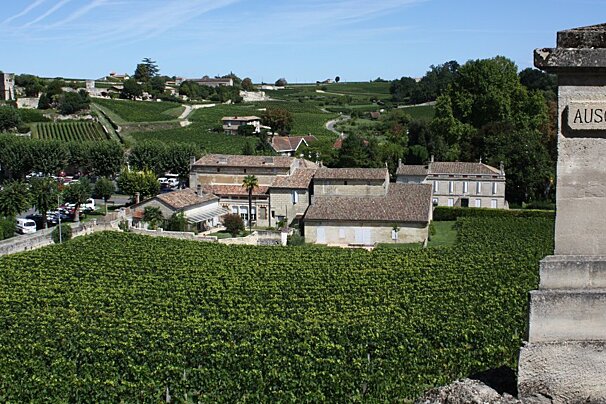
Along with Château Ausone, Cheval-Blanc produces one of two Saint-Emilion Premier Grand Cru Classé (A) wines. The wine estate dates to the 18th century and grows Cabernet Franc and Merlot wines.
The Buzet Winemakers cooperative was founded in 1953 as a result of local winegrowers' desire to see their wine flourish as it had done in the centuries gone by. Initially VDQS, the Buzet wine region was awarded "Appellation Contrôlée" status in 1973.
With a history that goes back to the 15th century, this estate produces a Saint-Emilion Grand Cru wine with Merlot, Cabernet Franc, Cabernet Sauvignon and Pressac varieties.