




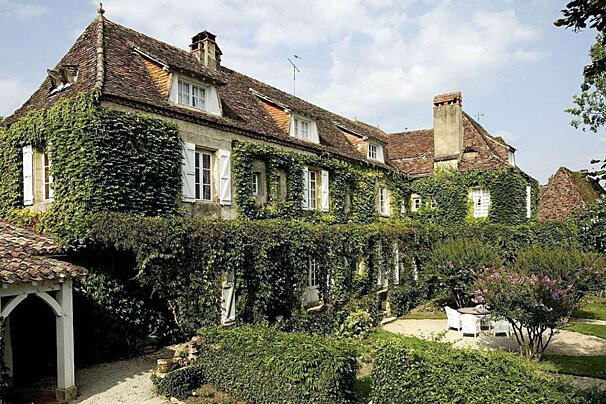
The undulating countryside north of the River Lot is dotted with chestnut woods and stone villages. In a tiny hamlet, close to the border with the Dordogne (3km), sits La Maison Fleurie, a picturesque stone cottage, adorned with pots of colourful flowers.






La Maison Fleurie Villa, Frayssinet-le-Gelat
2 bedroom Villa in Dordogne. Sleeps 4
External stone steps lead up from the courtyard to the first-floor terrace, which opens into the spacious, open-plan living area.
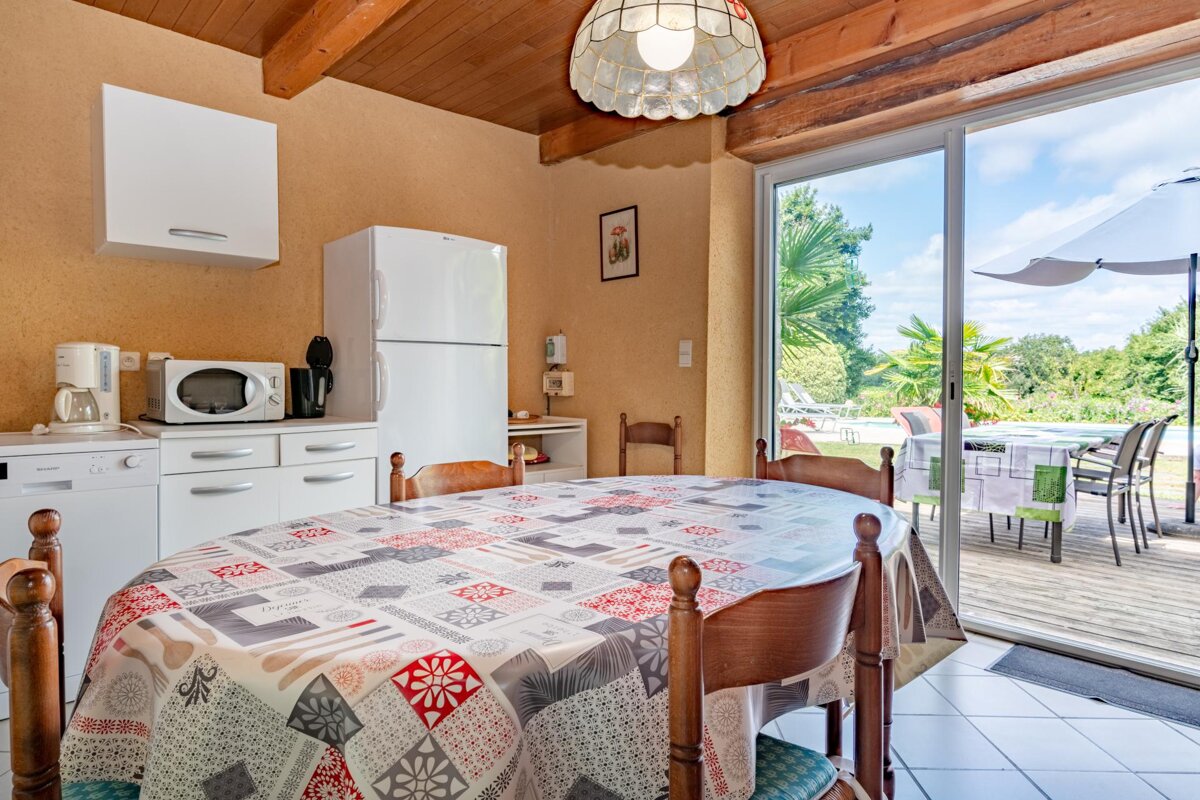
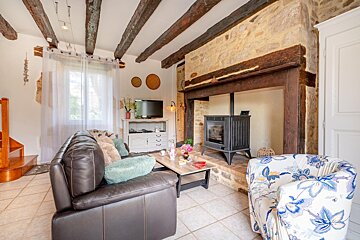
The original inglenook fireplace, set against open-faced walls, defines the sitting area, while the kitchen and dining table sit neatly at the other end. The two bedrooms are located on the second floor, tucked in the eaves of the roof, where substantial wooden cross beams add character and charm.
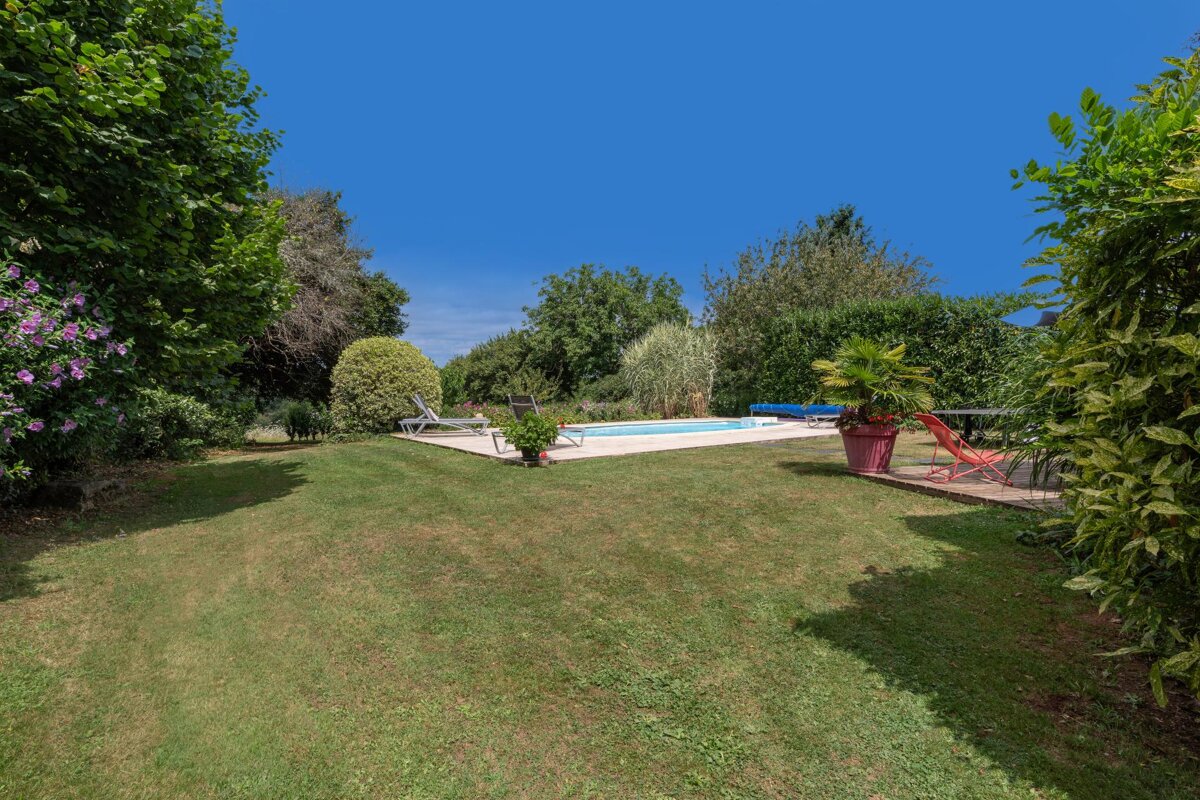
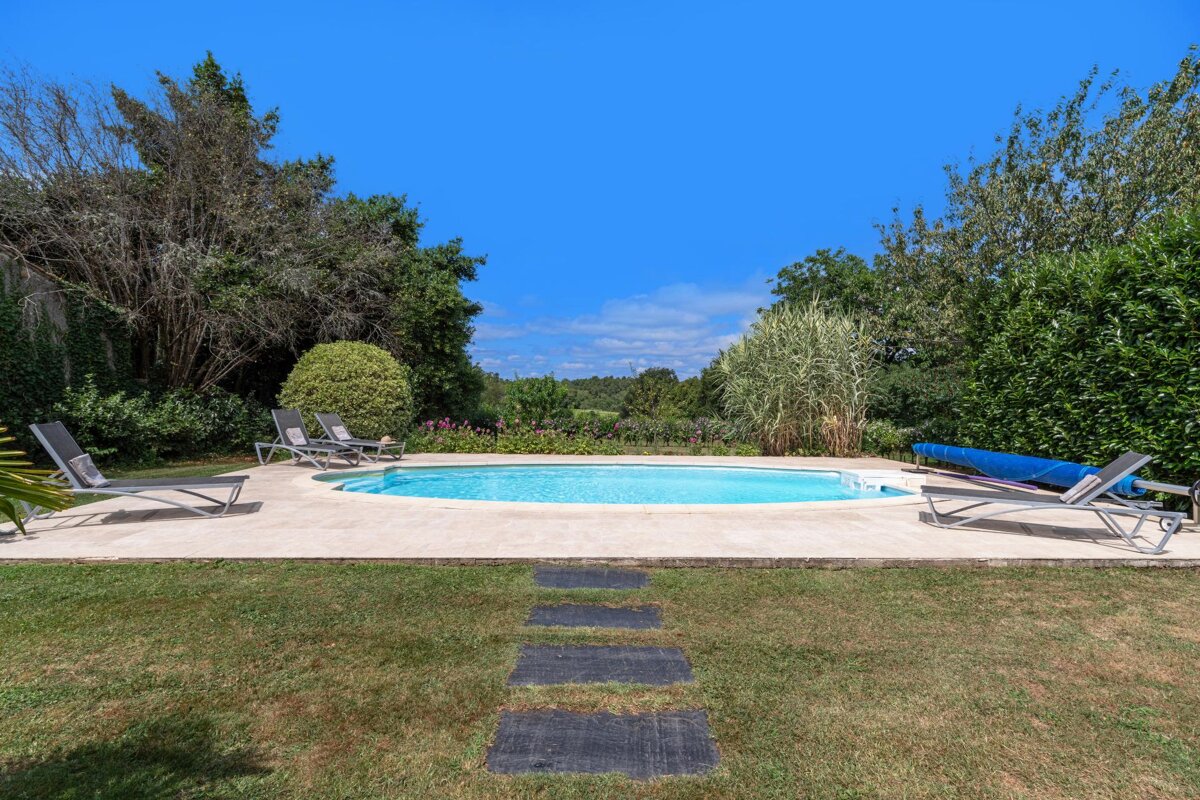
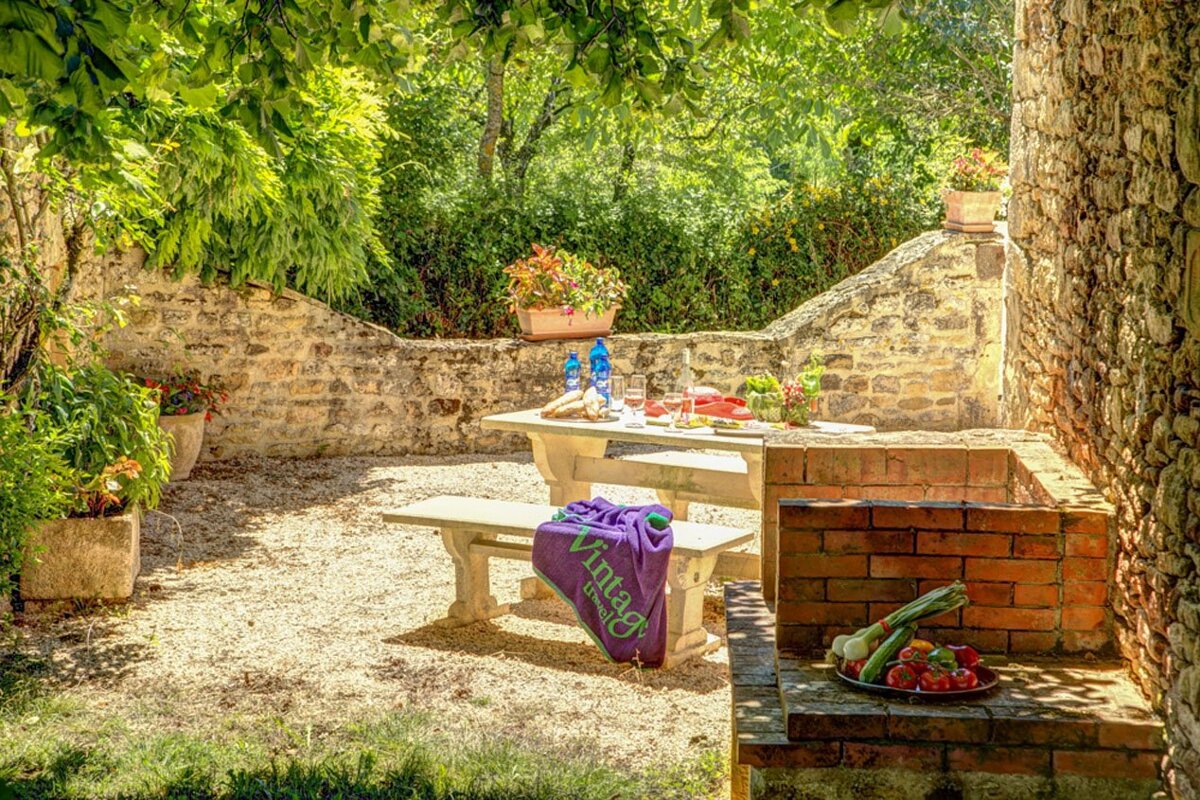
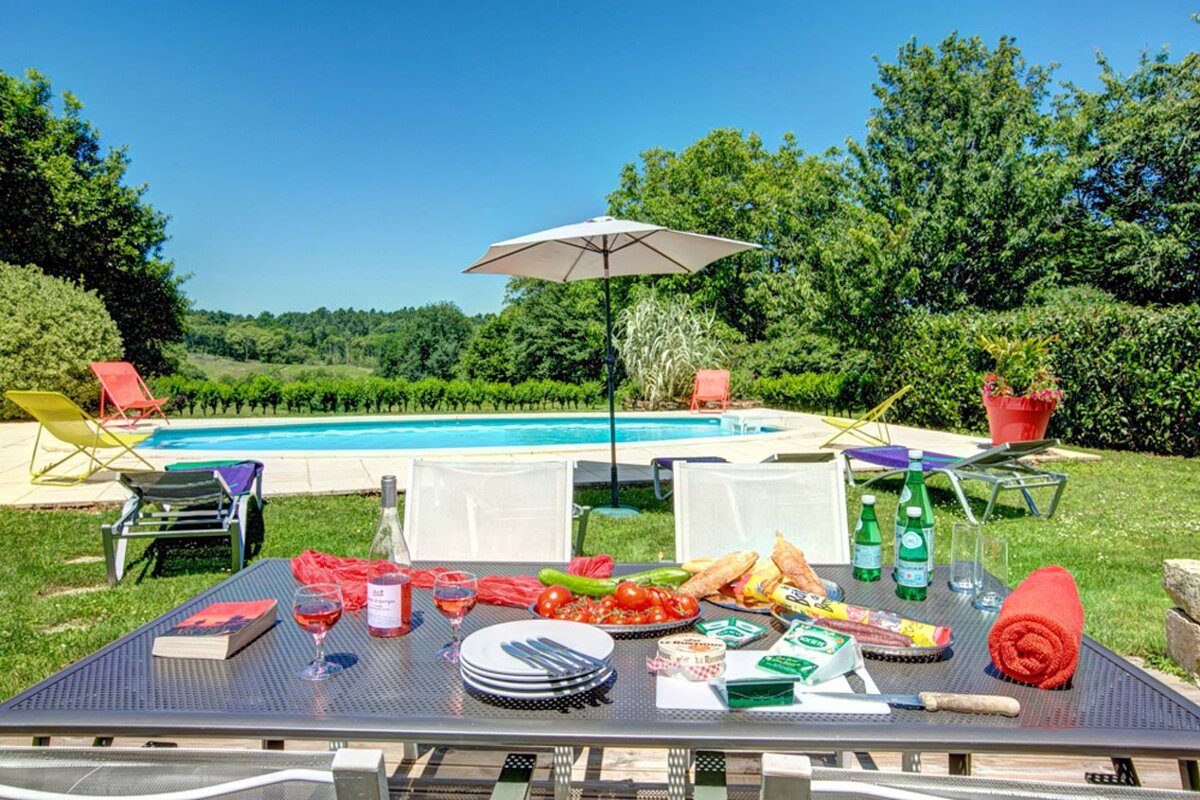
Beyond the courtyard, effectively divided by a stone barn that has been recently transformed into a summer kitchen, lies the pool, nestled within a well-established garden. Edged by rows of flowers and with stunning views over the surrounding countryside, this secluded spot offers complete privacy.
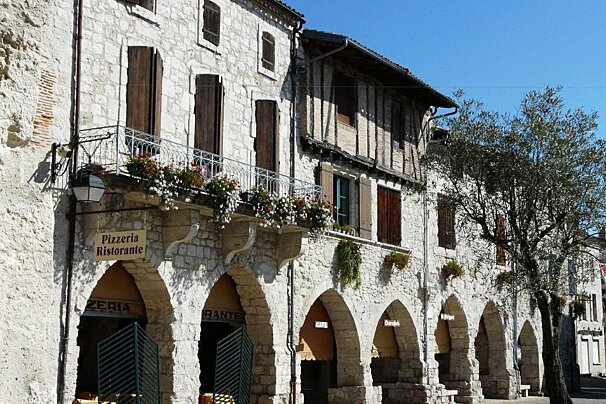
A typical 'ferme auberge' (country restaurant) is within walking distance (800m) of La Maison Fleurie. Essential amenities, including a restaurant, can be found in Frayssinet-le-Gelat (4km), along with a lake offering fishing, tennis courts, and a café by the water.
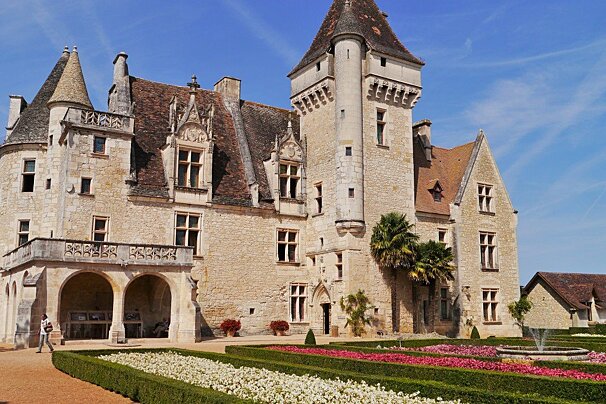
To the north lies the bastide town of Villefranche-du-Perigord (7km), while the well-preserved chateaux of Bonaguil, Biron, Beynac, and Castelnaud are all well worth a visit.
The pool
Private heated* swimming pool (8m x 4m) with Roman steps.
Things to do nearby
Things To Do in Dordogne
See all Things To Do in Dordogne-

Domaine des Eymaries Horse Riding, Les Eyzies-de-Tayac
Guided horse back trail riding in the Eymaries valley
Experience the beautiful Vezere valley and its prehistoric sites on horse back.
-

Le Bournat - Living History Museum, Le Bugue
Le Bournat is a unique village, every day life & objects from a bygone age
A living museum that offers much more than your ordinary museum or theme park. A great day out that will take you and your family back in time to an era long ago.
-

Canoes Loisirs Watersports, Vitrac
Kayak & canoe rental on the Dordogne river south of Sarlat
Offering various routes along the Dordogne river to enjoy the sights of the Perigord Noir region. Discover hidden treasures during a relaxing journey down the river.
-

Canoes Rivieres Loisirs, Limeuil
Accessible to all, you can travel the region at your own pace
With family, in a group, with friends and at any age, you can explore at your own pace two of the most beautiful rivers of Périgord.
-

Brantome Canoe, Brantome
Discover the Dronne river by canoe, paddle board or try something completely different!
Not only can you take a relaxing journey down the Dronne river in a canoe but you can try your hand at stand up paddle boarding or take to the cliffs and trees for some adventure above ground.
-

Durandal Vs Excalibur Equestrian Show, Rocamadour
Historical drama told with amazing equestrian acrobatics
An hour long horse show and theatre production that is based on the rivalry between the English and the French with lively, action-packed fun.


Restaurants nearby
Restaurants in Dordogne
See all Restaurants in Dordogne-

Hostellerie de Plaisance Restaurant, Saint Emilion
Michelin starred gourmet restaurant overlooking Saint-Emilion
This elegant and sophisticated two Michelin star restaurant offers creative dishes designed by chef Cédric Béchade, who plays with colours and textures in his cuisine.
-

La Chartreuse du Bignac Restaurant, St Nexans
Gourmet restaurant with indoor & terrace dining located in an rural 17th century building
The dining rooms allow for views of the surrounding vineyards and rolling hills. Drinks can also be enjoyed in the small library or among the chestnut trees.
-

La Toque Blanche Restaurant, Pujols
Michelin-starred restaurant with amazing views.
At this Michelin-starred restaurant, the chef, Jean-Baptiste Fabre, will introduce you to authentic cuisine based on the taste and flavours of seasonal produce. The restaurant has an exceptional position, offering a panoramic view of the 18th century medieval village of Pujols.
-

Eleonore Restaurant, Monpazier
'Haute cuisine' in an intimate, inviting location
Part of the successful Edward 1er Hotel, the restaurant has a lot to live up to. Welcoming and professional staff greet you into the small 28 seat dining room and you are sure to be delighted by the experience and attention to detail from start to finish.
-

Le Vieux Logis Restaurant, Tremolat
Michelin star perfection in former tabacco drying house
Stone walls, high ceilings, charming surroundings and elegant table settings lure you into the restaurant, with precise modern day interpretations of classic regional food, made from the finest local produce.
-

Les Merles Restaurant, Mouleydier
Contemporary restaurant set in a 17th century Château
The restaurant boasts an innovative menu with a focus on fine local fare and seemless service. The very word Les Merles stands for honesty and delightfulness, which is reflected throughout the dining experience.



Sights nearby
Sights in Dordogne
See all Sights in Dordogne-

Musee Zadkine
Museum to the Russian sculptor
The Russian sculptor, Ossip Zadkine, spent the best part of 30 years in Les Arques where he created many of his best works. This museum presents some of his pieces; his more religious works are housed in the church.
-
Chateau de Bonaguil, Saint-Front-sur-Lemance
Heavily fortified château ruins
The ruins of Château de Bonaguil house what is left of a castle constructed in the time of Louis XI, and then rebuilt in the 15th century. With its six towers and seven turrets, it was one of the most grand château in the region. It is heavily fortified with double walls and a leaf-shaped keep. It is a popular attraction and holds summer performances in its grounds.
-
Ichnospace
Dinosaur prints found in Crayssac
This fossil museum in Luzech houses tracks and footprints of dinosaurs from the Jurassic period of over 140 million years ago which were discovered in Crayssac. Thought to be Diplodocus-like quadrupeds, the tracks are over 10 metres long.
-

Troglodyte Cave Dwellings, Belves
In the heart of the medieval village of Belves
Discover the daily life of peasants who inhabited these underground dwellings in the Middle Ages, between the 13th & 18th centuries.
-

Chateau de Belves, Belves
Medieval castle perched high above the pretty town of Belves
Treat yourself to an intriguing discovery with this intimate and charming medieval castle. Walk in the garden and enjoy unforgettable views of the Nauze valley.
-
Chateau de Biron, Biron
Huge château owned by the Gontaut-Biron family
Perched high on a hill, this huge château was built and owned by the Gontaut-Biron family until the 20th century. Today is contains a mix of architectural styles, extravagant Renaissance and Gothic features combining with medieval. It has an interesting two-level chapel dating from the 14th century. The châeau is often used in period dramas and films.


Towns nearby
Towns & Villages in Dordogne
See all Towns & Villages in Dordogne-

Belvès, Perigord Noir
East of Bergerac and south of Siorac-en-Perigord lies the town of Belvès
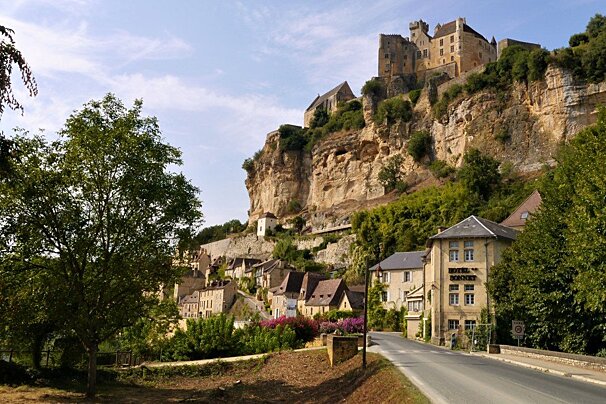
Sitting proud on a rocky outcrop overlooking the Nauze valley, this fortified town boasts seven bell towers and an 11th century keep that is still standing, despite numerous invasions and wars.
-

Domme, Perigord Noir
Pretty bastide town set high along the banks of the Dordogne river
This bastide town, sitting high above the Dordogne river, has an impressive number of its 13th century fortifications still intact, including three of its original gates.
-

La Roque-Gageac, Perigord Noir
Nestled between a cliff face and the north bank of the Dordogne river
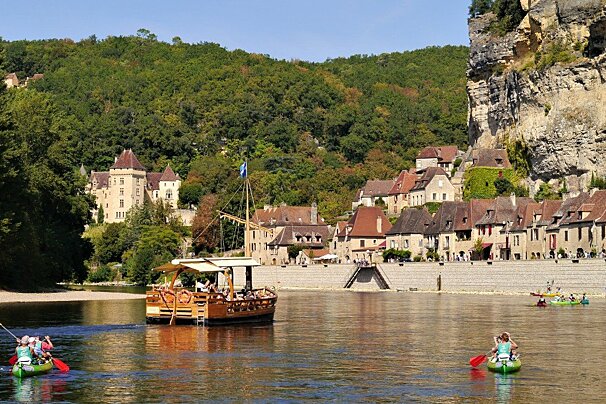
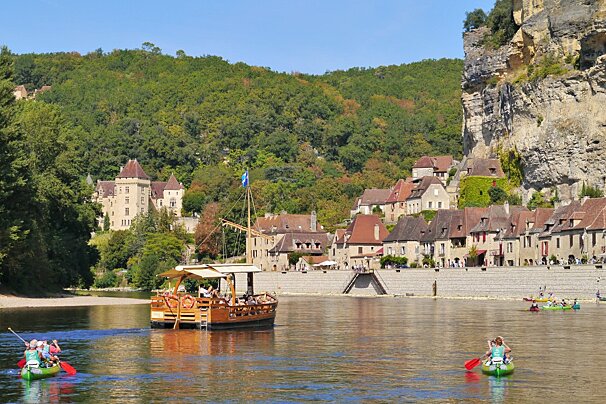
It's hard to imagine a nicer village than La Roque-Gageac, with its huge limestone cliffs that tower behind the Renaissance-style houses built in creamy stone with burnt red roofs.
-

Beynac-et-Cazenac, Perigord Noir
Beautiful village close to the eastern border of Dordogne and the Lot
The village of Beynac-et-Cazenac is thought to date back to the 12th century when its imposing cliff top château was constructed.
-

Cahors, Lot
The largest town in the Lot and with Roman roots. Situated on the banks of the Lot river
Formerly the capital of the old province of Quercy, Cahors is the largest town in the Lot valley. The site was inhabited by the Cadurci tribe in Roman-Gaul times.
-

Cadouin, Perigord Noir
Pretty medieval village featuring a 12th Century abbey in the east of the Dordogne
A small but beautiful medieval village built around the Cadoudin Abbey, constructed by the Cistercians in the 12th century. It's situated very close to the neighbouring larger town of Le Buisson de Cadouin