

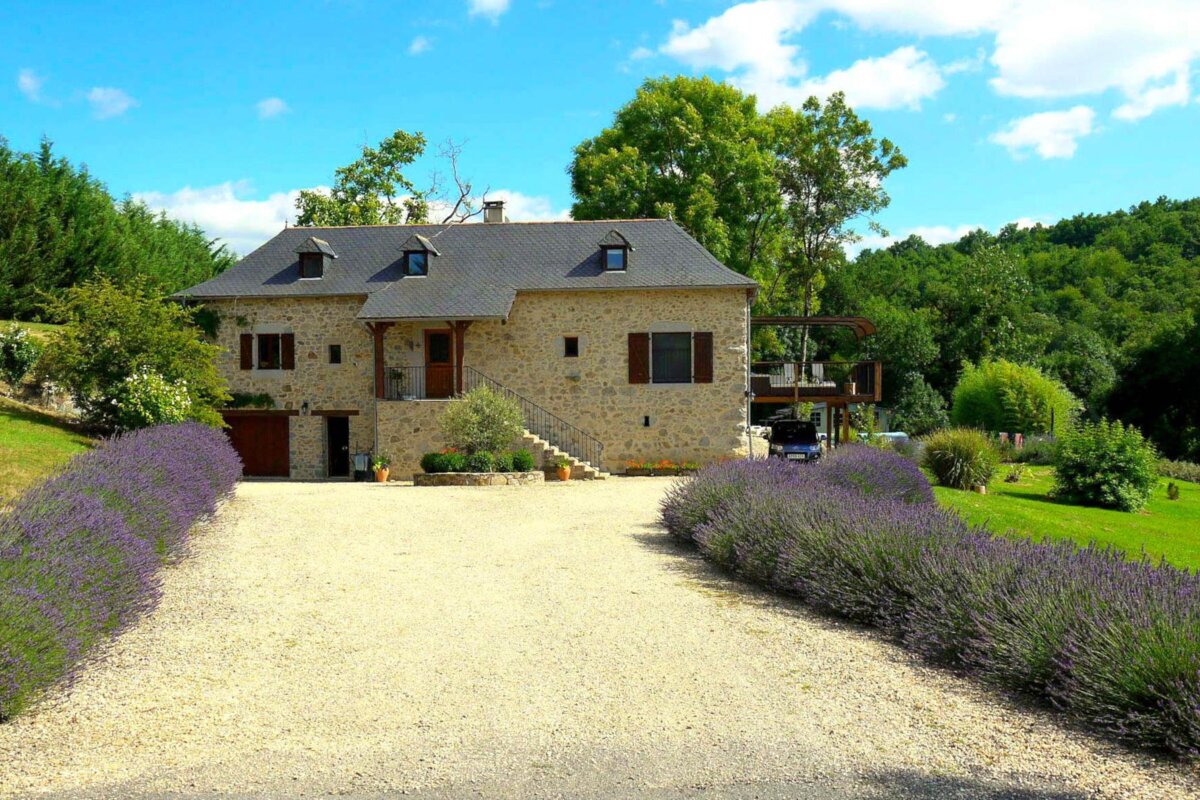






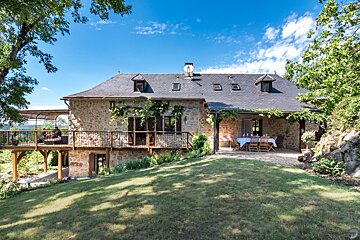
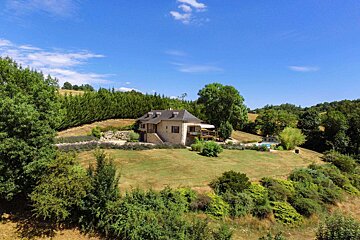
Nestling on the side of a hill at the end of a hidden valley, close to the medieval bastide of Najac, the first glimpse of La Sérénité, framed by walnut trees, is its steeply pitched roof atop beautifully restored stone walls. As you arrive along the sweep of drive, the impressive stone façade of this stunning property is revealed in all its glory.









La Sérénité Villa, Najac
4 bedroom Villa in Aveyron. Sleeps 8
Set against the backdrop of original farmhouse features, La Sérénité offers a welcoming and relaxing atmosphere, from the heated pool and elevated deck to the comfortable rooms and modern amenities.
Reflecting the building’s farmhouse origins, the main living accommodation is located on the first floor. To the right of the entrance hall, the exposed stone walls, wood beams, and original 'evier' sink retain their traditional charm, creating a rustic feel in the triple-aspect living room. Across from this, the spacious kitchen/diner is also triple-aspect, offering a light and airy space with double doors leading out to the covered dining terrace. Throughout the property, a tiled floor adds a contemporary touch.
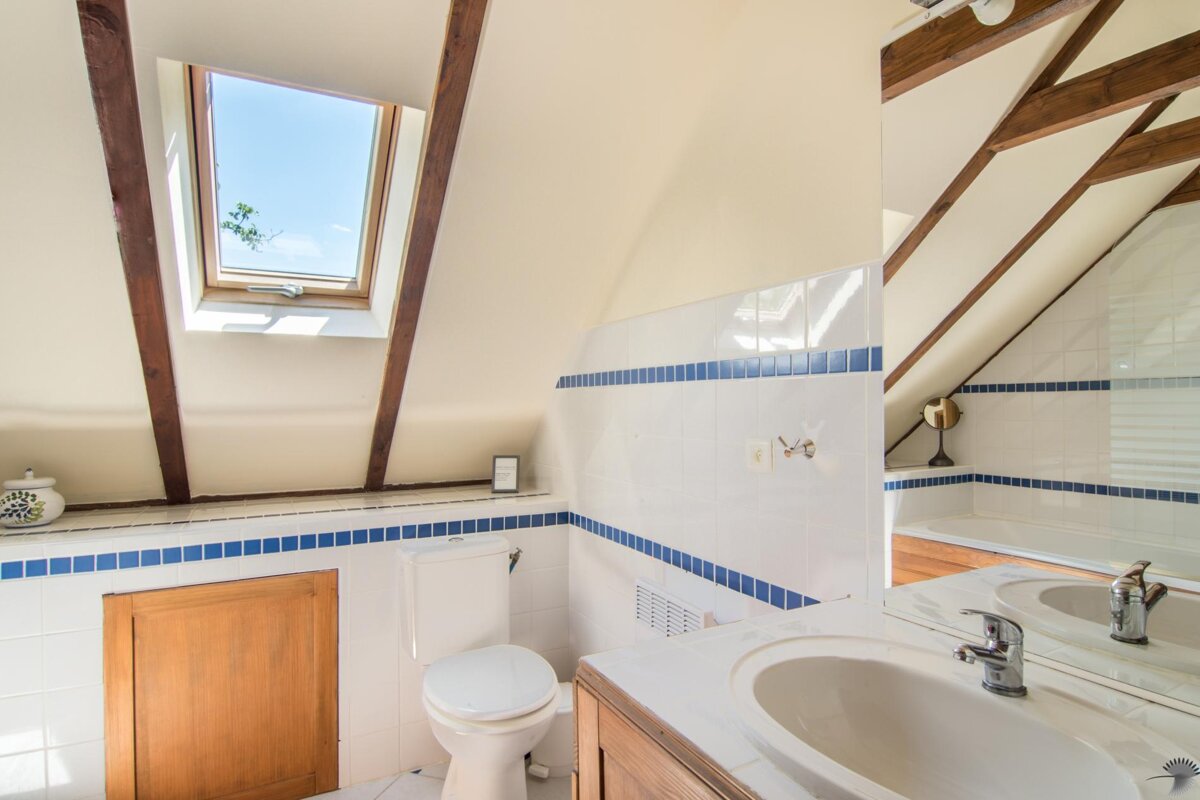
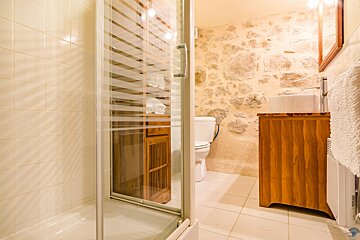
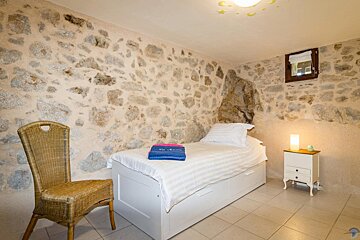
The top floor of La Sérénité is dedicated to two bedroom suites, each beautifully decorated with exposed wood rafters and spacious en suite facilities, complete with air conditioning. Two additional bedrooms are located on the ground floor, accessible via an oak staircase from the living room. The double bedroom on this floor, with direct access to the garden and pool, is perfect for guests seeking a little independence.
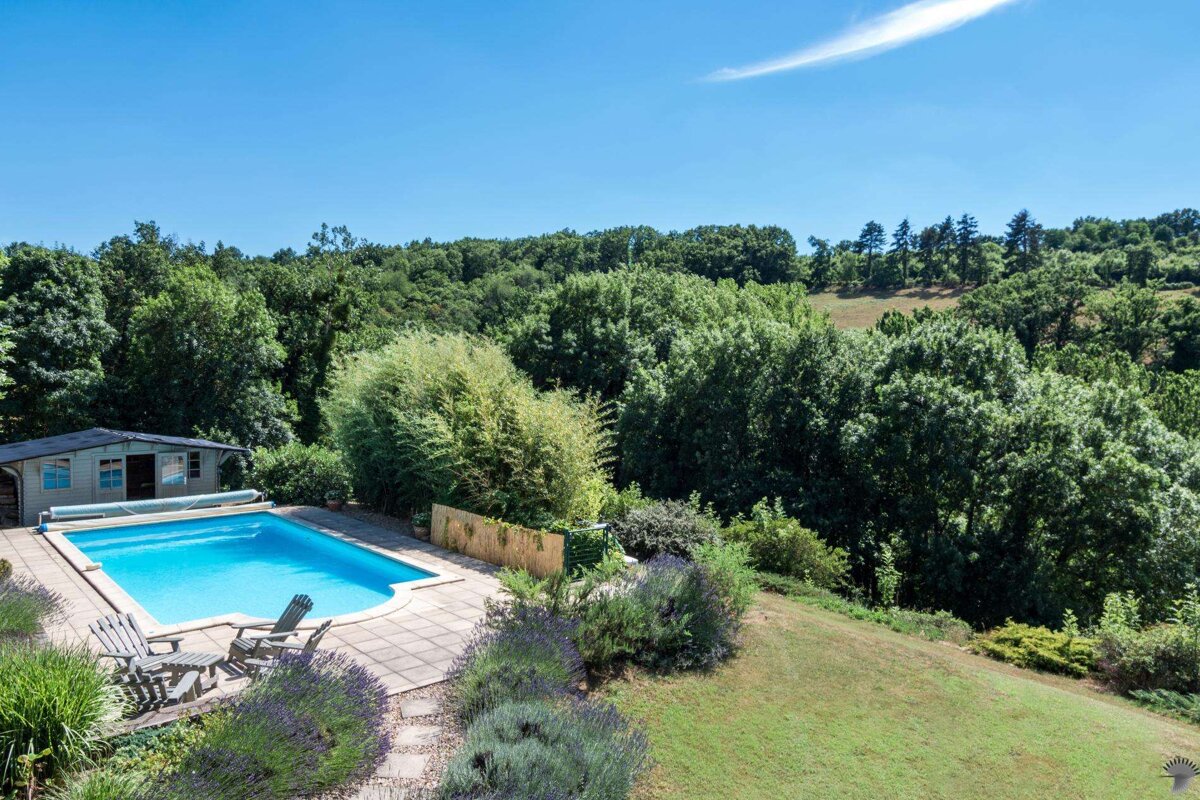
Outside, two ancient walnut trees provide natural shade by the dining terrace, with a cluster of ash trees underlit at night offering further shelter near the pool area. The garden features circular benches and Shaker-style furniture, adding a rustic charm. An elevated wooden deck, recently added to the side of the house, provides a fabulous spot for relaxing on outdoor sofas while taking in the stunning views.
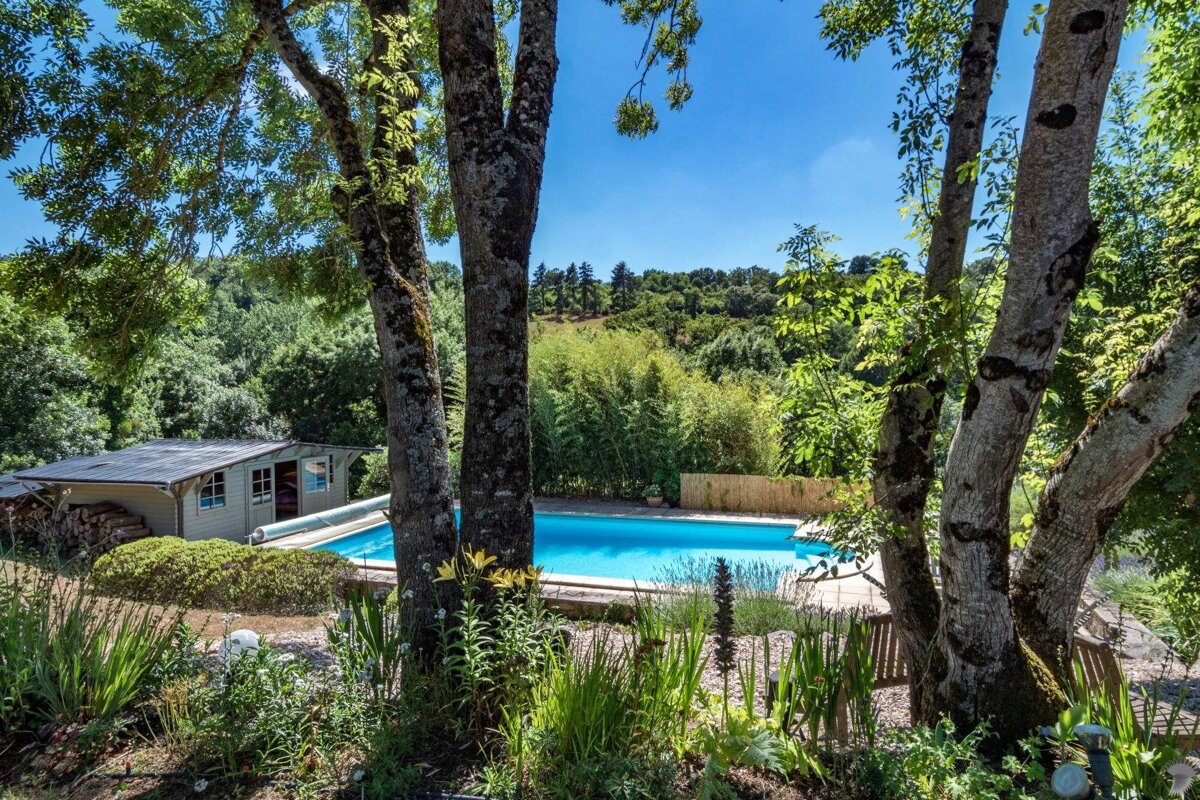
The heated infinity pool is perfectly positioned to capture the sun and offers superb views over the Aveyron river gorges. The surrounding lawned garden, planted with a variety of flowers, is secluded and tranquil, providing a peaceful retreat.
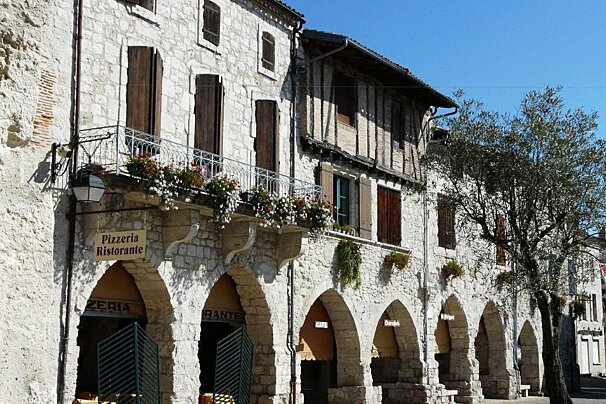
The village of La Fouillade (3km) offers a couple of cafés and shops for everyday conveniences. For more exploration, Najac (6km), one of the most picturesque bastide villages, is a must-visit for its Sunday market and excellent eateries, from pizzerias to award-winning restaurants. An evening stroll through the village, with its château spectacularly illuminated, followed by dinner, is the perfect way to end the day.
Things to do nearby
Things To Do in Dordogne
See all Things To Do in Dordogne-

Port Miniature, Bergerac
Become a captain for the day in the miniature port of Bergerac
Take this opportunity to drive the electric replicas of real boats: tug, trawler, ferry, steam Mississippi barges...The small port has everything for those who want to go out there and play sailor "for real".
-

Perigord Dordogne Montgolfieres, Beynac-et-Cazenac
Discover the beautiful landscapes for the Dordogne from the air
Come fly over the Dordogne, Perigord, castles, manors, fortresses, the valleys of the Dordogne and Vézère, discover it in all its charm.
-

Tuk-Tuk Tour (Wine Tour), Saint Emilion
An original & entertaining way to see the city & its vineyards
100% electric and 100% silent, the infamous tuk-tuk comes to Saint Emilion to take you on a tour or the town and the vineyards that surround it.
-

Reptiland Animal Park, Martel
Discover the largest collection of live reptiles in Europe
For over 25 years this park has allowed visitors to come into close (and safe!) encounter with crocodiles, cobras and more than 200 other reptiles and venomous species.
-

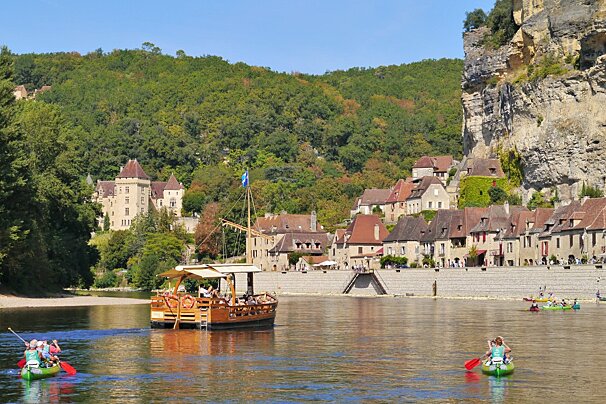
Canoe Dordogne
Enjoy a gentle kayak down the river Dordogne from La Roque Gageac
Hire a canoe or kayak from this company and you can enjoy a gentle river cruise and the chance to explore the wonderful Dordogne river and its banks.
-

Carennac Aventure Watersports, Carennac
Canoeing, kayaking and hiking along the Dordogne river
Situated at the foot of Carennac village this watersports centre offers more than just fun on the water! They offer three main activities; canoeing or kayaking, group canoeing with up to six people in the same boat, and adventure trekking with overnight camping out in the wild.


Restaurants nearby
Restaurants in Dordogne
See all Restaurants in Dordogne-

Hostellerie de Plaisance Restaurant, Saint Emilion
Michelin starred gourmet restaurant overlooking Saint-Emilion
This elegant and sophisticated two Michelin star restaurant offers creative dishes designed by chef Cédric Béchade, who plays with colours and textures in his cuisine.
-

La Chartreuse du Bignac Restaurant, St Nexans
Gourmet restaurant with indoor & terrace dining located in an rural 17th century building
The dining rooms allow for views of the surrounding vineyards and rolling hills. Drinks can also be enjoyed in the small library or among the chestnut trees.
-

La Dinee du Viguier Restaurant, Figeac
Creative cuisine from chef Daniel Authié
This restaurant in the old guard rooms of the Château du Viguier Royal, makes this old mansion-house kitchen alive again. The chef, Daniel Authié, creates cooking art which mixes contemporary and traditional flavours. The sommelier and head waiter, Bernard Badia, offers helpful advice on the food characteristics and complementary wines.
-

Relais Mont Le Viaur Restaurant, Saint-Andre-de-Najac
Family run, beautifully presented restaurant
In the charming little village of Saint Andre de Najac, this charming hotel-restaurant offers fine dining, relaxation and nature.
-

La Metairie Restaurant, Mauzac
A discovery of the Perigord & its world famous cuisine
Set in the hotel's 19th Century building, the dining room has wonderful stone walls and comforting, traditional table settings. Weather permitting, you may be able to relish your meal outside on the flowery terrace overlooking the lush garden or even down by the pool.
-

Moulin de l'Abbaye Restaurant, Brantome
Michelin-starred romantic waterside gastronomy
Within the hotel grounds of the picture perfect Moulin de l'Abbaye hotel, set alongside the River Dronne and with a dining room oozing class and a waterside terrace with shaded trees, it would be difficult to find a spot in the world more idyllic than this!


Sights nearby
Sights in Dordogne
See all Sights in Dordogne-
Abbaye de Beaulieu-en-Rouergue
Beautiful abbey, now an arts centre
The beautiful Abbeye de Beaulieu-en-Rouergue was established in 1144 in the valley of the Seye by the Bishop of Rodez. This Cistercian abbey had a successful existence for many years and was expanded in the 17th and 18th centuries. It went into decline as the monastic discipline was relaxed but was saved from ruin in 1960 when it was subject to extensive renovation and turned into a contemporary arts centre which holds a number of temporary exhibitions each year.
-
Maison des Arts Georges-Pompidou
Contemporary arts exhibitions
In Cajarc, the George Pompidou arts centre holds a number of significant art exhibitions each year designed at promoting new trends in contemporary art. It was founded in 1989 and named after the former Prime Minister who spent time here.
-
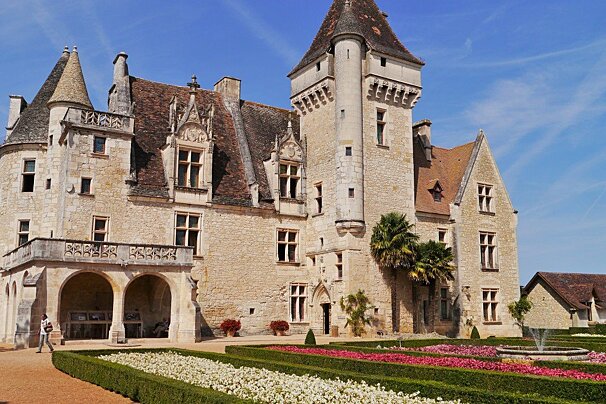
Chateau de Cenevieres, Cenevieres
Palatial residence of the de Gourdon family
Originally built by the lords of La Popie from the 9th century onwards, the château was sold to the de Gourdon family in the 12th century where it remained until the 17th century. Significant restoration work was undertaken in the late 19th and early 20th centuries to maintain this Renaissance palace. Today, a number of Renaissance frescoes discovered over the years can be viewed in its rooms.
-
Grotte de Foissac, Capdenac
Prehistoric cave used as a tomb
This prehistoric cave is situated on a limestone plateau in the Lot valley, in an area speckled with prehistoric remains and megalithic monuments. The cave was discovered in 1965 and is a remarkable subterranean museum. Over 400 metres in length, it preserves human footprints, clay quarries, fireplaces, tools, and many bones. Some of the cave network was used as tombs; nearly 30 skeletons have been discovered dating as far back as the Copper Age. There is also a museum with a good archaeological collection.
-
Musee Champollion
Hieroglyphics museum
This museum is dedicated to Figeac-born Egyptologist Jean-François Champollion who was the first person to interpret Egyptian hieroglyphics from the Rosetta Stone in 1822. As well as charting the course of his short life, this museum depicts the history of script from a number of different languages and has a collection of ancient Egyptian relics.
-
Grotte de Pech-Merle, Cabrerets
Huge prehistoric cave with animal paintings
This huge cave , more than two kilometres long, has seven large halls open to the public. Its lower prehistoric chambers were discovered by teenagers in the 1920s. They contain prehistoric paintings and sketches, human footprints and limestone rock formations which include cave pearls. The huge Chapelle des Mammoths is the first stop, which contains impressive art that uses the contours of the rock perfectly. There are literally hundreds of drawings. The museum is good, displaying a diverse collection of artefacts.
Towns nearby
Towns & Villages in Dordogne
See all Towns & Villages in Dordogne-

Cahors, Lot
The largest town in the Lot and with Roman roots. Situated on the banks of the Lot river
Formerly the capital of the old province of Quercy, Cahors is the largest town in the Lot valley. The site was inhabited by the Cadurci tribe in Roman-Gaul times.
-

Saint-Céré, Lot
Sitting on the La Bave river, boasting cobbled streets and a Chateau in the east of the Dordogne
The riverside town of Saint-Céré is a lovely place to base yourself for excursions in the region. The La Bave river winds its way through the centre of the town and its old buildings have been carefully restored, retaining their timber vaulting or Renaissance stonework.
-

Rocamadour, Lot
Clifftop medieval village and pilgrimage site in the Lot region
Perched on the side of a cliff, in a gorge above the river Alzou, this medieval town has a breathtaking setting.
-

Autoire, Lot
To the east of Dordogne on the edge of Causses du Quercy regional park
Picturesque village typical of Quercy. The traditional houses have corbelled fronts, brown-tiled roofs and pigeon lofts built into their walls.
-

Moissac
Situated at the confluence of the rivers Garonne and Tarn at the Canal de Garonne
The main town of the area between 1800 and 1926, it was all but destroyed during the floods of 1930, which caused devastation across the entire south west of France and counted as a 100 year flood.
-

Carennac, Lot
Pretty village steeped in history and culture situated to the east of the Dordogne in Lot
Carennac has been previously voted 'One of the 'Most Beautiful Villages in France' and it's easy to see why. The blonde stone and red-brown roofs of its buildings have tall chimneys and are adorned with creepers that turn red in the autumn.