Le Petit Train de Perigueux
Discover the art and history of the city of Perigueux, exploring the ancient city, old town and admiring the beauty.
2 bedroom Villa in Floressas, South West France. Sleeps 4
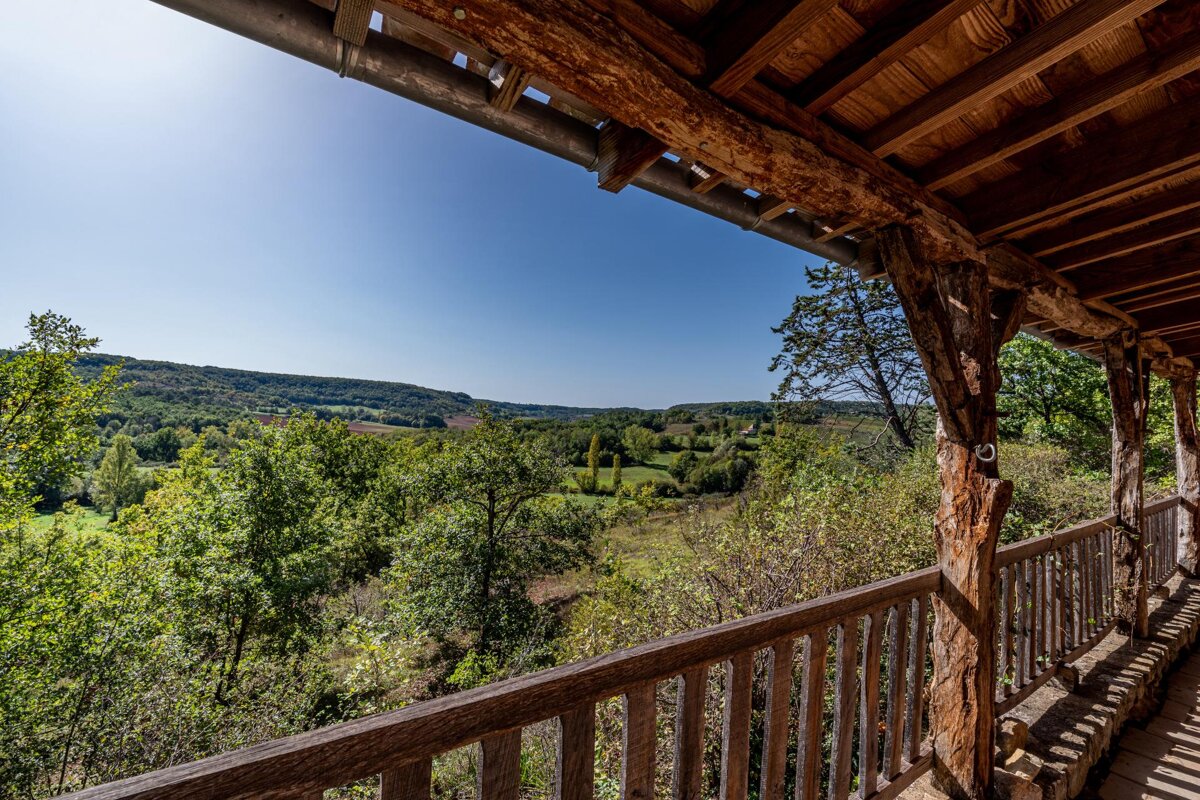
A restorative, rural retreat is the most befitting way to describe Tourondel. Tucked away on a hillside in the glorious Lot countryside, it is a bolthole for those wishing to escape the hustle and bustle of daily life, an open invitation to relax, drink in the views and enjoy the peaceful sounds of nature.
There are plenty of enticing spots to enjoy the beautiful surroundings: an east-facing balcony is ideal for breakfast, while a covered terrace offers shade in the summer afternoons, making it a perfect spot for dinner. The garden doubles as an open-air yoga studio, and the pool terrace, with its far-reaching views over the green patchwork of fields, woods, and hills, can be enjoyed throughout the day and night. Try stargazing under the clear skies for a truly magical experience.
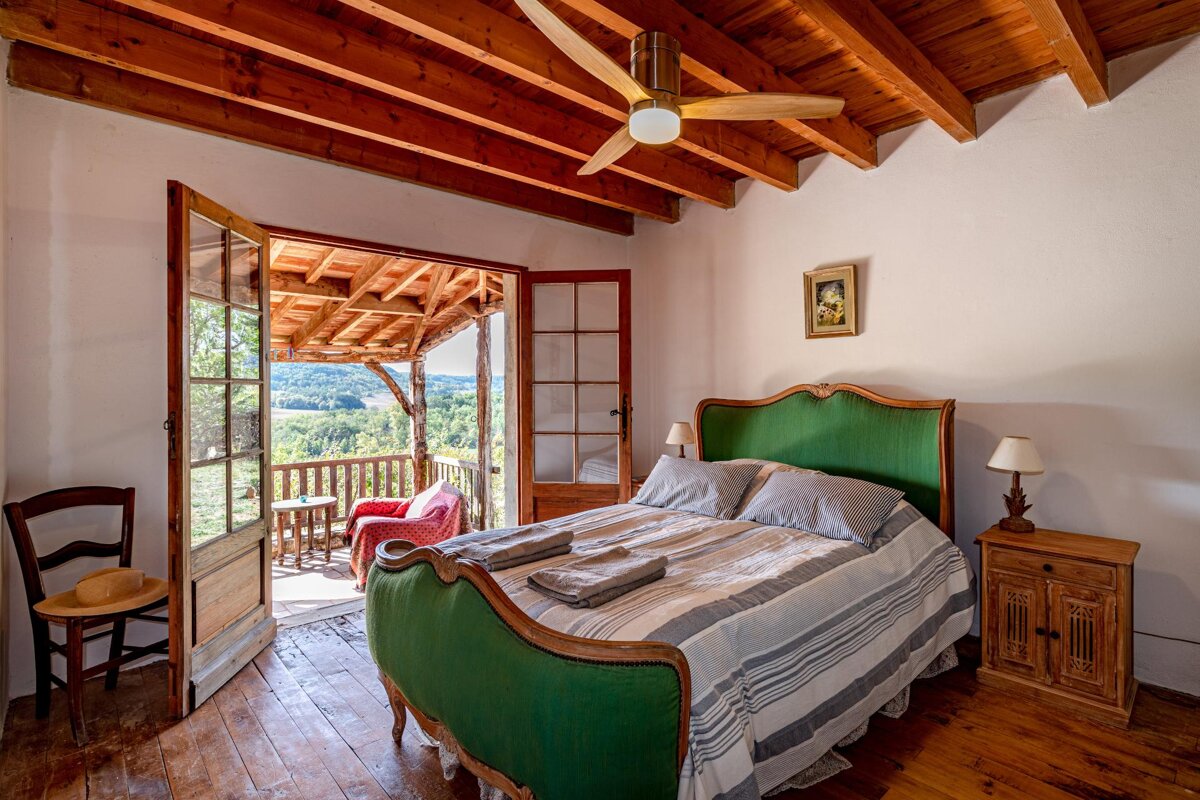
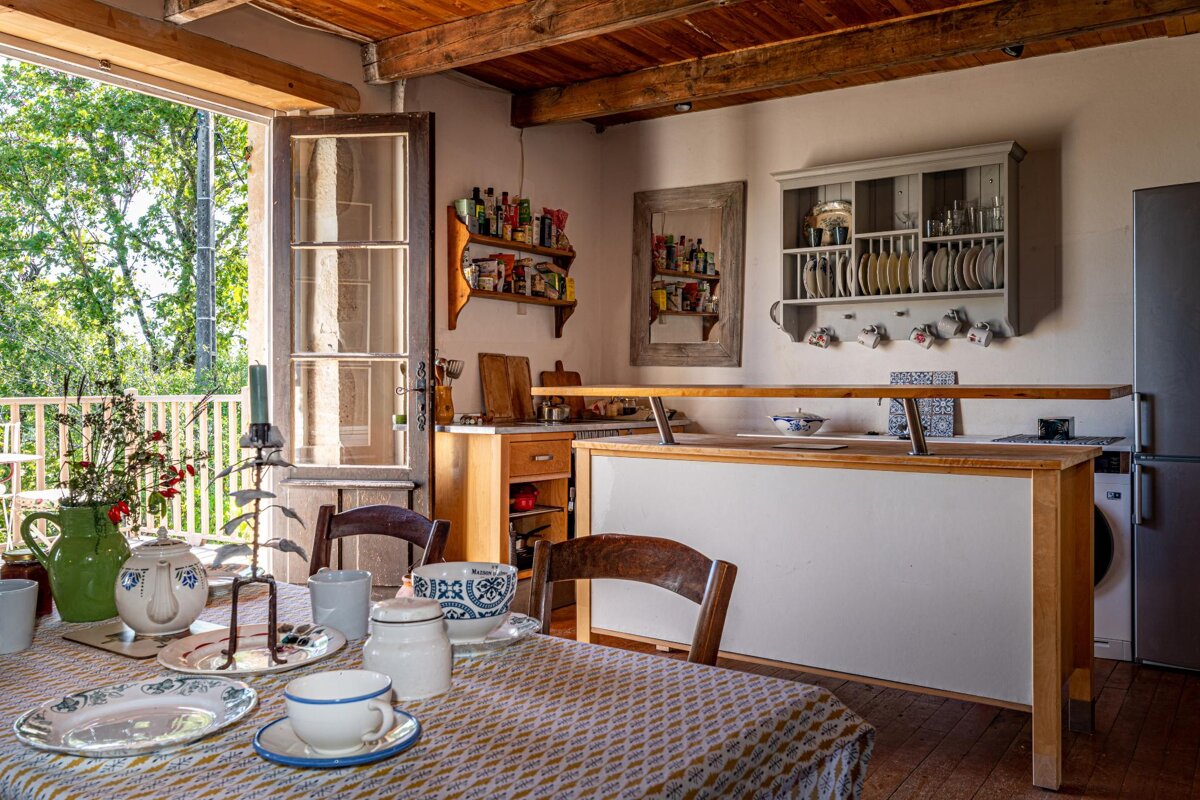
The charm of this rustic retreat extends indoors. Wood beams and floors, a deep fireplace lined with patterned tiles, a glass chandelier, and cosy sofas and armchairs all lend character and style to the open-plan living space. The area is thoughtfully zoned into three sections: kitchen, dining, and living. Both bedrooms have access to the covered terrace, and with the recent addition of a shower room, there’s a bathroom for each bedroom.
The nearby village of Floressas (2km) hosts a weekly market during the summer, while Sérignac (4km) has a lovely local restaurant. Both can be reached on foot via scenic woodland paths, taking approximately 30-40 minutes. For a special occasion or simply because you're on holiday, the nearby Château de Chambert (3km) offers fine dining in a fabulous setting, highly recommended by locals.
Tourondel is ideally located between Tournon d’Agenais (20min) and Puy l’Évêque (15min), making amenities easily accessible. These hilltop towns are a delight to explore, with Puy l’Évêque also offering boat trips and canoeing on the River Lot. A short drive along the river takes you to Cahors, famous for its market, the UNESCO-listed Valentré Bridge, and of course, its renowned wines.
Discover the art and history of the city of Perigueux, exploring the ancient city, old town and admiring the beauty.
A living museum that offers much more than your ordinary museum or theme park. A great day out that will take you and your family back in time to an era long ago.
100% electric and 100% silent, the infamous tuk-tuk comes to Saint Emilion to take you on a tour or the town and the vineyards that surround it.
With family, in a group, with friends and at any age, you can explore at your own pace two of the most beautiful rivers of Périgord.
Come fly over the Dordogne, Perigord, castles, manors, fortresses, the valleys of the Dordogne and Vézère, discover it in all its charm.
Passing under the limestones cliff of Beynac you will travel along the Dordogne valley to Marqueyssac and the hanging gardens, Chateau de Fayrac and Chateau de Castelnaud.
This elegant and sophisticated two Michelin star restaurant offers creative dishes designed by chef Cédric Béchade, who plays with colours and textures in his cuisine.
The dining rooms allow for views of the surrounding vineyards and rolling hills. Drinks can also be enjoyed in the small library or among the chestnut trees.
In a dining room graced with elegance and class, you can savour a meal while looking out to the surrounding Lay Valley, vineyards and Chateau gardens. Internationally renowned, the 1 michelin star restaurant serves up refined cuisine based on the superior produce of the region.
Part of the successful Edward 1er Hotel, the restaurant has a lot to live up to. Welcoming and professional staff greet you into the small 28 seat dining room and you are sure to be delighted by the experience and attention to detail from start to finish.
At this Michelin-starred restaurant, the chef, Jean-Baptiste Fabre, will introduce you to authentic cuisine based on the taste and flavours of seasonal produce. The restaurant has an exceptional position, offering a panoramic view of the 18th century medieval village of Pujols.
Located in the world capital of the truffle, at this small hotel, the truffle has become the main feature.
This fossil museum in Luzech houses tracks and footprints of dinosaurs from the Jurassic period of over 140 million years ago which were discovered in Crayssac. Thought to be Diplodocus-like quadrupeds, the tracks are over 10 metres long.
The ruins of Château de Bonaguil house what is left of a castle constructed in the time of Louis XI, and then rebuilt in the 15th century. With its six towers and seven turrets, it was one of the most grand château in the region. It is heavily fortified with double walls and a leaf-shaped keep. It is a popular attraction and holds summer performances in its grounds.
The Russian sculptor, Ossip Zadkine, spent the best part of 30 years in Les Arques where he created many of his best works. This museum presents some of his pieces; his more religious works are housed in the church.
Developed by an engineer called Frédéric Suisse the system uses the amazing power of the river to pump water from the fountain of the Chartreux, thus supplying Cahors with drinking water.
Built in the 14th century, the Valentré bridge is synonymous with the town of Cahors.
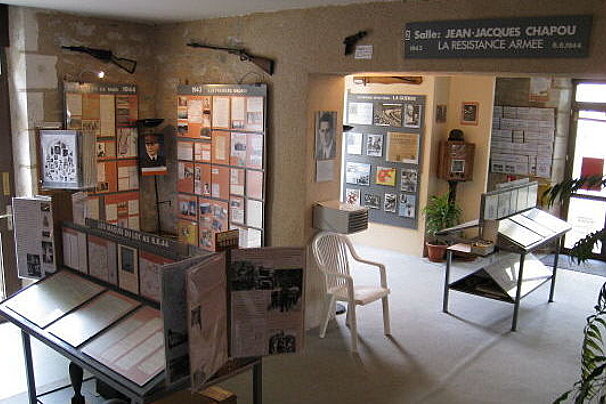
Spread over three levels this museums tells many stories of resistance efforts, concentration camps and the part the Cahors played in the liberation of France.
Formerly the capital of the old province of Quercy, Cahors is the largest town in the Lot valley. The site was inhabited by the Cadurci tribe in Roman-Gaul times.
The main town of the area between 1800 and 1926, it was all but destroyed during the floods of 1930, which caused devastation across the entire south west of France and counted as a 100 year flood.
Sitting proud on a rocky outcrop overlooking the Nauze valley, this fortified town boasts seven bell towers and an 11th century keep that is still standing, despite numerous invasions and wars.
This bastide town, sitting high above the Dordogne river, has an impressive number of its 13th century fortifications still intact, including three of its original gates.
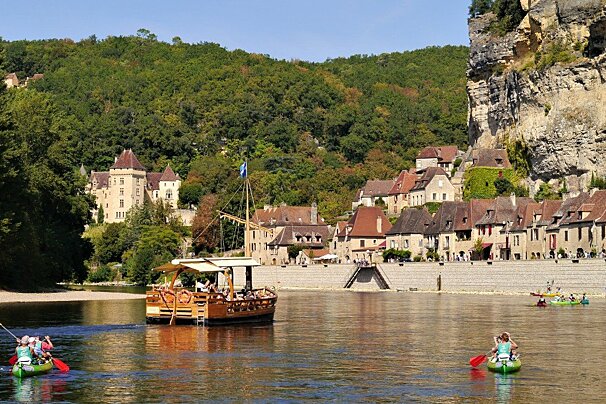
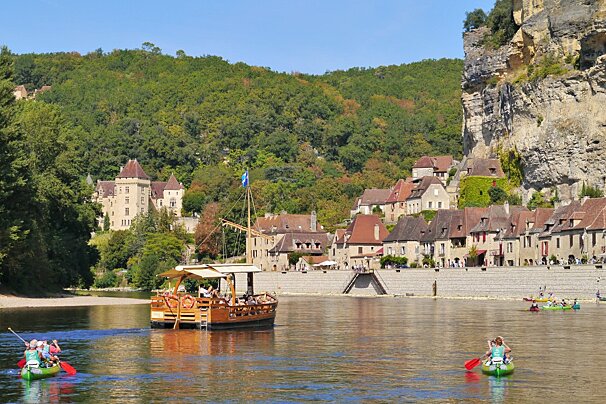
It's hard to imagine a nicer village than La Roque-Gageac, with its huge limestone cliffs that tower behind the Renaissance-style houses built in creamy stone with burnt red roofs.
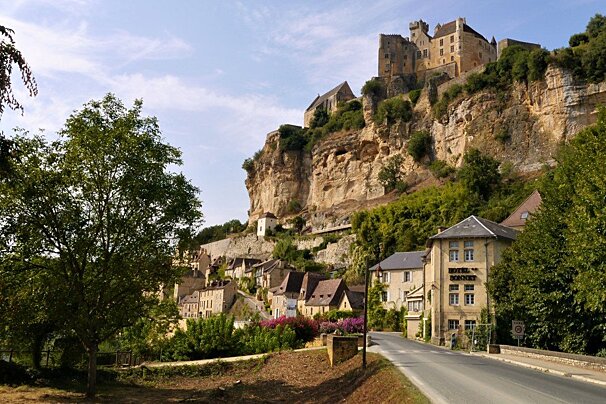
The village of Beynac-et-Cazenac is thought to date back to the 12th century when its imposing cliff top château was constructed.