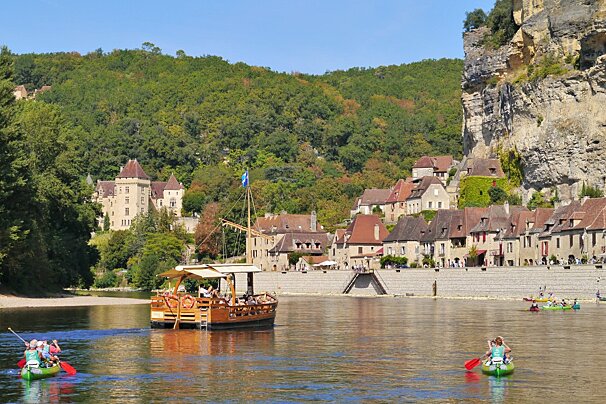
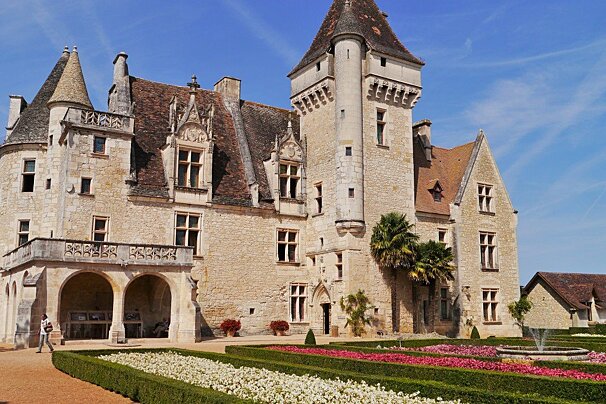
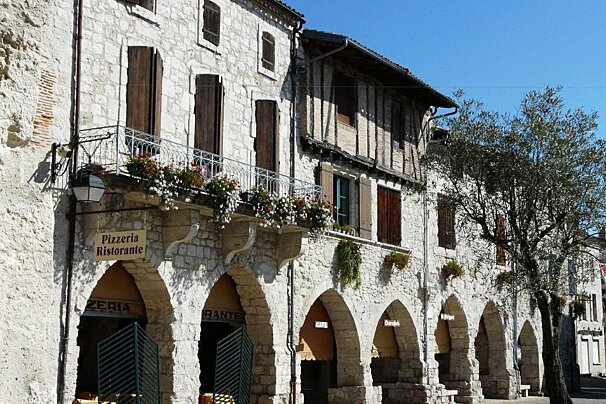
Auberge de la Salvetat Hotel, Cadouin
Things to do nearby
Things To Do in Dordogne
See all Things To Do in Dordogne-

Brantome Canoe, Brantome
Discover the Dronne river by canoe, paddle board or try something completely different!
Not only can you take a relaxing journey down the Dronne river in a canoe but you can try your hand at stand up paddle boarding or take to the cliffs and trees for some adventure above ground.
-

Le Petit Train de Perigueux
Guided sightseeing of Perigueux in le Petit Train
Discover the art and history of the city of Perigueux, exploring the ancient city, old town and admiring the beauty.
-

Brantome Police Horses & Friends
Enjoy a tour of this home for retired British police horses, north of Brantôme
Brantôme Police Horses provides care and rehabilitation for many horses and ponies alongside donkeys, dogs, cats, sheep, goats and chickens. Situated in the heart of the countryside, just ten minutes north of Brantôme.
-

Canoes Rivieres Loisirs, Limeuil
Accessible to all, you can travel the region at your own pace
With family, in a group, with friends and at any age, you can explore at your own pace two of the most beautiful rivers of Périgord.
-

Montgolfieres du Perigord, La Roque-Gageac
Enjoy the sights of the Perigord from above in a hot air balloon
With a fleet of five hot air balloons this company can take groups of 2 or 3 passengers up into the air above La Roque Gageac and the Dordogne river to enjoy a birds-eye view of this beautiful area.
-

Foret des Singes Wildlife Park, Rocamadour
See the endangered Barbary Macaque roaming in this wildlife park
This wildlife park is dedicated to the Barbary Macaque monkey who roams free in the 20 hectares of woodland.


Restaurants nearby
Restaurants in Dordogne
See all Restaurants in Dordogne-

Hostellerie de Plaisance Restaurant, Saint Emilion
Michelin starred gourmet restaurant overlooking Saint-Emilion
This elegant and sophisticated two Michelin star restaurant offers creative dishes designed by chef Cédric Béchade, who plays with colours and textures in his cuisine.
-

La Chartreuse du Bignac Restaurant, St Nexans
Gourmet restaurant with indoor & terrace dining located in an rural 17th century building
The dining rooms allow for views of the surrounding vineyards and rolling hills. Drinks can also be enjoyed in the small library or among the chestnut trees.
-

Logis de la Cadene Restaurant, Saint Emilion
Contemporary French restaurant in the centre of a charming medieval town
Founded in 1848, this restaurant is one of the oldest in the town of Saint-Émilion, a UNESCO World Heritage site. French creative cuisine is served in its terrace and three dining rooms, accompanied by wines from the region.
-

Le Moulin de la Beune Restaurant, Les Eyzies-de-Tayac
Food of the Perigord inside an old stone mill house
A bright restaurant with stone walls, old wooden beams, fireplace and inviting allure, offer up culinary delights from the region. A strong focus is on local local treats and seasonality.
-

Eleonore Restaurant, Monpazier
'Haute cuisine' in an intimate, inviting location
Part of the successful Edward 1er Hotel, the restaurant has a lot to live up to. Welcoming and professional staff greet you into the small 28 seat dining room and you are sure to be delighted by the experience and attention to detail from start to finish.
-

Chateau de la Fleunie Restaurant, Condat-sur-Vezere
Gastronomic haven in Castle retreat
Set inside a 106-hectare estate Castle, the restaurant setting alone is worth a visit, but with beautiful stone walls, painted wooden beams and decorated in traditional fashion, it is very much worth taking a step inside.




Sights nearby
Sights in Dordogne
See all Sights in Dordogne-

Abbaye de Cadouin Abbey, Le Buisson-de-Cadouin
12th century Cistercian abbey in the town of Cadouin
Founded by Gérard de Salles in 1115, and affiliated to the Cistercians, the Cadouin Abbey is an incredibly well-preserved example of religious architecture.
-

Chateau de Belves, Belves
Medieval castle perched high above the pretty town of Belves
Treat yourself to an intriguing discovery with this intimate and charming medieval castle. Walk in the garden and enjoy unforgettable views of the Nauze valley.
-

Troglodyte Cave Dwellings, Belves
In the heart of the medieval village of Belves
Discover the daily life of peasants who inhabited these underground dwellings in the Middle Ages, between the 13th & 18th centuries.
-

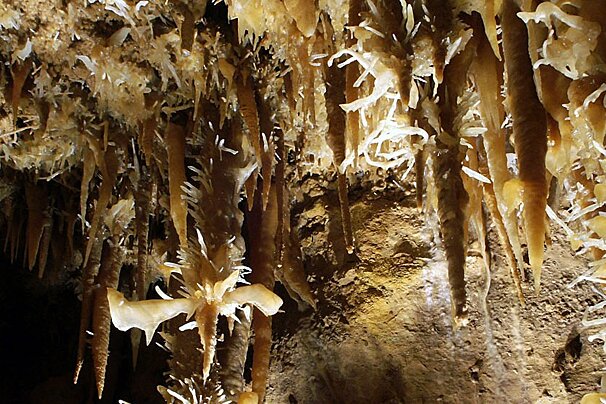
Grottes de Maxange, Le Buisson-de-Cadouin
Beautiful limestone & crystal formations within caves at Le Buisson de Cadouin
These caves were discovered in 2000 by quarrying work and contain a unique concentration of calcite formations.
-

Les Bambous de Planbuisson, Le Buisson de Cadouin
A wonderfully unique collection of bamboo and other grasses
With nearly 200 species of bamboo and 210 other grasses from around the world as well as rare trees and shrubs, perennials, annuals, herbs and wild, this is a truely wonderful collection.
-

Les Jardins Panoramiques, Limeuil
Beautiful gardens with stunning views & a long history in the town of Limeuil
This beautiful and vast area has been split into themed garden areas, with interpretive trails running through them to both educate and add to the enjoyment of visitors.




Towns nearby
Towns & Villages in Dordogne
See all Towns & Villages in Dordogne-

Cadouin, Perigord Noir
Pretty medieval village featuring a 12th Century abbey in the east of the Dordogne
A small but beautiful medieval village built around the Cadoudin Abbey, constructed by the Cistercians in the 12th century. It's situated very close to the neighbouring larger town of Le Buisson de Cadouin
-

Belvès, Perigord Noir
East of Bergerac and south of Siorac-en-Perigord lies the town of Belvès
Sitting proud on a rocky outcrop overlooking the Nauze valley, this fortified town boasts seven bell towers and an 11th century keep that is still standing, despite numerous invasions and wars.
-

Limeuil, Perigord Pourpre
A pretty hill top village where the Dordogne river meets the Vézère river
Limeuil is a picturesque old village which features on the list of 'Les Plus Beaux Villages de France'. It has a pretty park on the top of the hill and some ruins from its medieval past.
-

Trémolat, Perigord Noir
Charming village set amongst the green fields and vineyards of Bergerac
Trémolat was originally home to a 6th century hermit, Saint-Cybard, before monks built their monastery here in the 9th century.
-

Lalinde, Perigord Pourpre
The first English bastide town and an important historical military site
Founded in 1261, Lalinde was the first English bastide. Situated on the banks of the Dorgdogne, the town is also crossed by the Canal de Lalinde, constructed to bypass the dangerous rapids of Grand Thoret.
-

Le Bugue, Perigord Noir
Relaxed market town situated in the heart of one of the most visited areas in France
The relaxed town of Le Bugue sits on the river Vézère where it's joined by the Doux. A more tranquil base for exploring the region, it has some pretty, narrow streets and a bustling market twice a week.