Prehisto Parc
This park recreates life in prehistoric times.
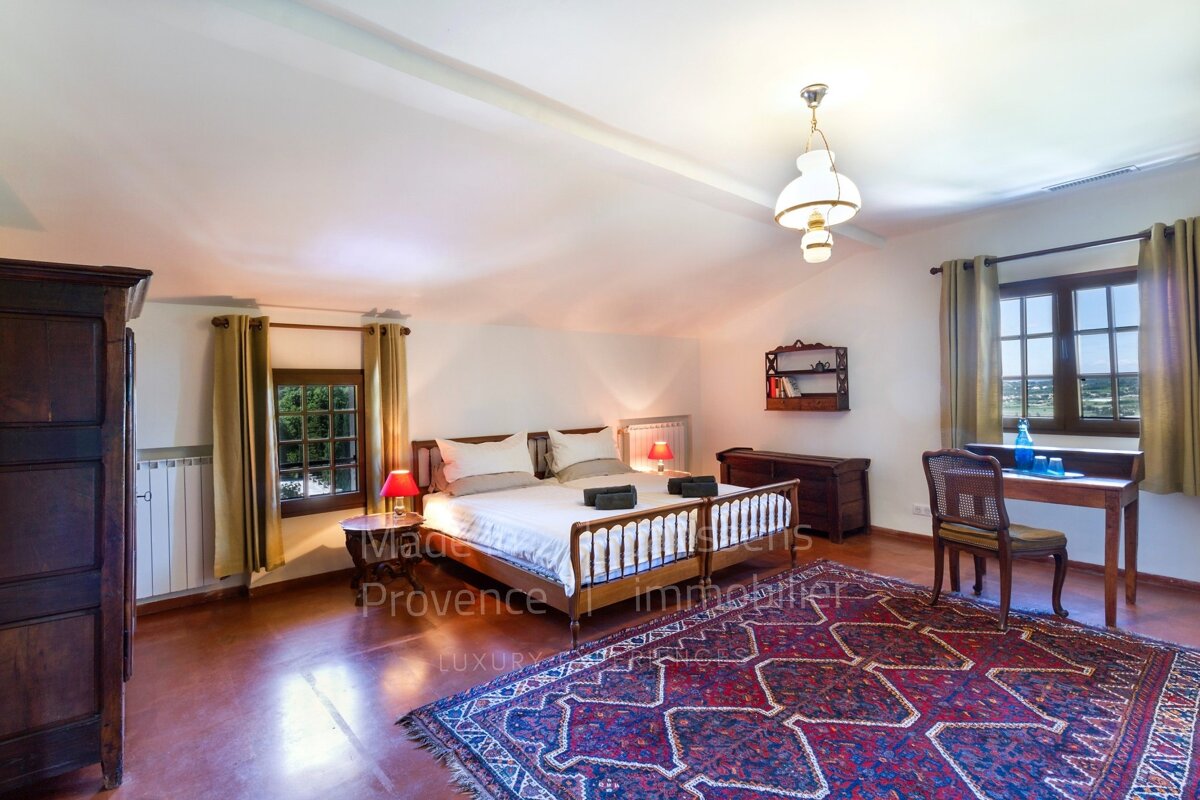
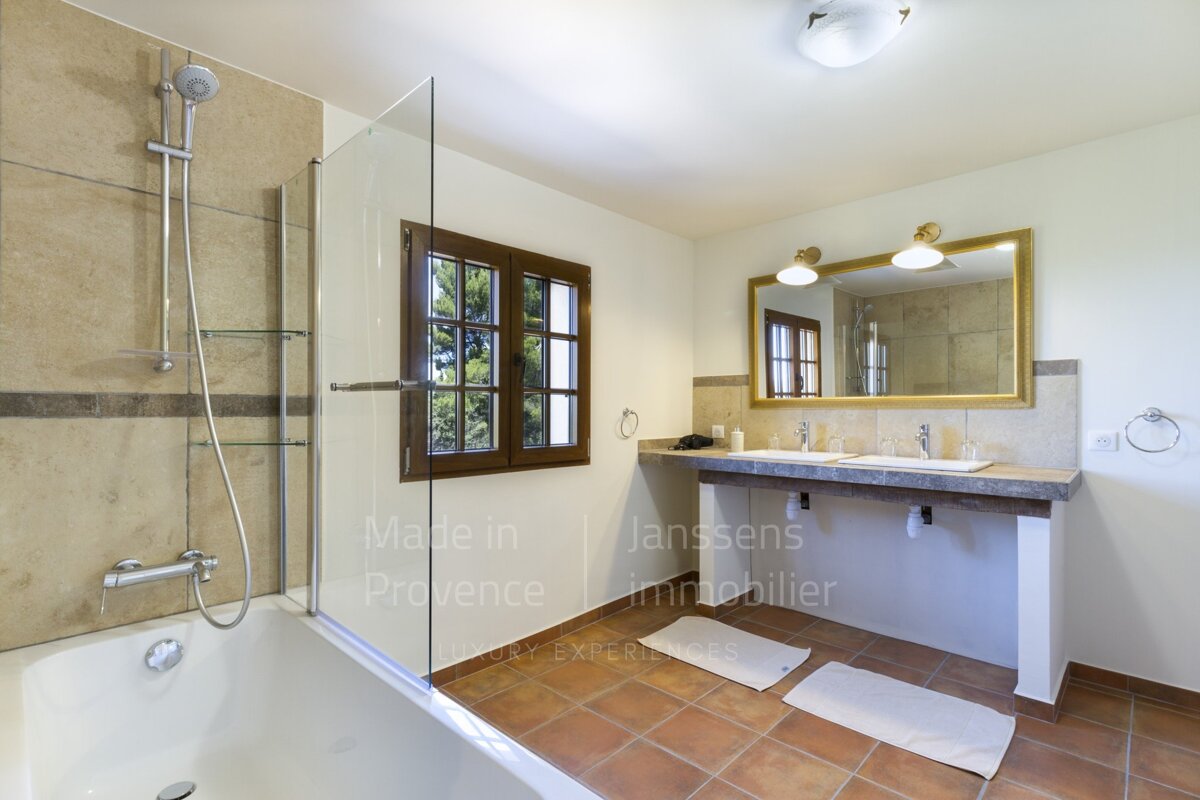
3 bedroom Villa in Villars. Sleeps 6
Property for vacation rental in the Luberon - Le Domaine de Saint Pons
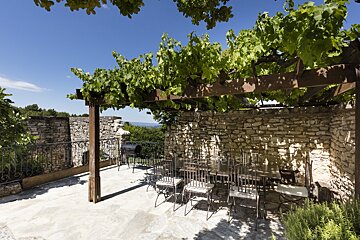
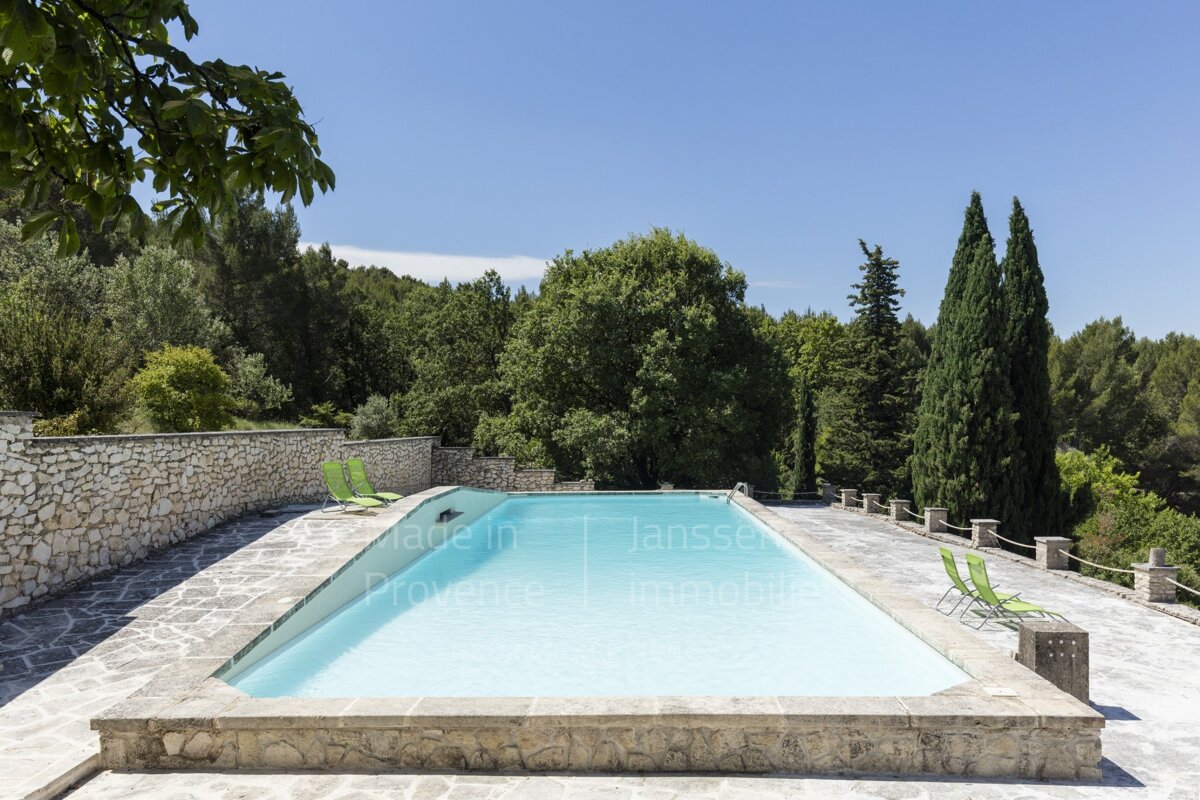
Discover this property for rent in Villars in the Luberon Regional Park, with swimming pool on 40 hectares of grounds, offering a breathtaking view for your holidays in the peace and quiet.
The Domaine de Saint Pons, a historic place steeped in history, has 3 bedrooms and can welcome 6 people.
You will be charmed by the beauty of the landscape and the location, surrounded by vines and oak and pine forests.
The huge swimming pool allows everyone to enjoy a swimming in full freedom.
4-star label awarded by Atout France.
The ground floor has:
First floor:
Second floor:
Other facilities:
Outdoors:
Outdoor parking for several cars and garage for 2 vehicles.
Included in the price: final cleaning + bed linen and bath and pool towels.
Cleaning and change of bed linen included in the rental price midway through a 2-week stay.
A caretaker couple live on site.
The château next door offers wine tasting and a visit around their vineyard for discovering the different grape varieties.
The tourist tax is calculated per night and per adult according to the classification.
This park recreates life in prehistoric times.
An hour long horse show and theatre production that is based on the rivalry between the English and the French with lively, action-packed fun.
Come fly over the Dordogne, Perigord, castles, manors, fortresses, the valleys of the Dordogne and Vézère, discover it in all its charm.
Also known as the Truffle train, it will take you on a journey of 8 miles (13 Km) round trip, more than 80 meters (260 feet) high cliff, giving a wonderful panorama of the Dordogne Valley.
Experience the beautiful Vezere valley and its prehistoric sites on horse back.
A great place for a family day out and to escape the pre-historic world of the Dordogne...instead, enjoy the family atmosphere and displays of this fresh water aquarium.
This elegant and sophisticated two Michelin star restaurant offers creative dishes designed by chef Cédric Béchade, who plays with colours and textures in his cuisine.
The dining rooms allow for views of the surrounding vineyards and rolling hills. Drinks can also be enjoyed in the small library or among the chestnut trees.
Michelin star restaurant with 14 immaculate rooms in the Lacave region.
Stone walls, high ceilings, charming surroundings and elegant table settings lure you into the restaurant, with precise modern day interpretations of classic regional food, made from the finest local produce.
At this Michelin-starred restaurant, the chef, Jean-Baptiste Fabre, will introduce you to authentic cuisine based on the taste and flavours of seasonal produce. The restaurant has an exceptional position, offering a panoramic view of the 18th century medieval village of Pujols.
With a terrace set alongside the Vezerie river and within a hotel clad in Virginia Creeper and decorated with heart, warmth and style, the restaurant is hugely inviting.
The present castle dates to 1530 when it was built by the Herm family. Its Gothic style consists of a rectangular main building flanked by two round towers.
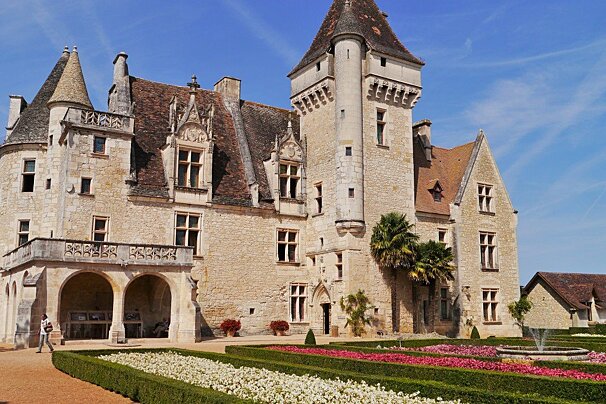
This Renaissance château was built in the 16th century in the village of Villars. Its architecture resembles that of many château in the Loire. It was built for Mondot de La Marthonie who was the first president of the Paris Parliament. Reasonably small in size, it was intended to be a second home where he could go hunting. The interior has been wonderfully restored and it still contains the original wooden timbers.
The caves at Villars were only discovered in 1953 by a team of pot holers from the Périgueux Caving Club who were wandering around the Cluzeau coppice. After many expeditions, over 13 kilometres of galleries and chambers were discovered with some impressive stalactites and stalagmites as well as prehistoric paintings which are thought to date to the Magdalenian period, 17,000 years ago.
This prehistoric cave is situated on a limestone plateau in the Lot valley, in an area speckled with prehistoric remains and megalithic monuments. The cave was discovered in 1965 and is a remarkable subterranean museum. Over 400 metres in length, it preserves human footprints, clay quarries, fireplaces, tools, and many bones. Some of the cave network was used as tombs; nearly 30 skeletons have been discovered dating as far back as the Copper Age. There is also a museum with a good archaeological collection.
This museum is dedicated to Figeac-born Egyptologist Jean-François Champollion who was the first person to interpret Egyptian hieroglyphics from the Rosetta Stone in 1822. As well as charting the course of his short life, this museum depicts the history of script from a number of different languages and has a collection of ancient Egyptian relics.
The beautiful Abbeye de Beaulieu-en-Rouergue was established in 1144 in the valley of the Seye by the Bishop of Rodez. This Cistercian abbey had a successful existence for many years and was expanded in the 17th and 18th centuries. It went into decline as the monastic discipline was relaxed but was saved from ruin in 1960 when it was subject to extensive renovation and turned into a contemporary arts centre which holds a number of temporary exhibitions each year.
The riverside town of Saint-Céré is a lovely place to base yourself for excursions in the region. The La Bave river winds its way through the centre of the town and its old buildings have been carefully restored, retaining their timber vaulting or Renaissance stonework.
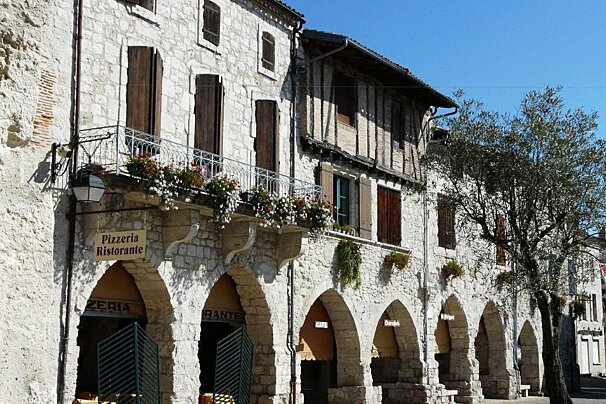
Picturesque village typical of Quercy. The traditional houses have corbelled fronts, brown-tiled roofs and pigeon lofts built into their walls.
This medieval town on a bend in the Dordogne grew around its 9th century Benedictine abbey of Saint-Pierre.
Carennac has been previously voted 'One of the 'Most Beautiful Villages in France' and it's easy to see why. The blonde stone and red-brown roofs of its buildings have tall chimneys and are adorned with creepers that turn red in the autumn.
Perched on the side of a cliff, in a gorge above the river Alzou, this medieval town has a breathtaking setting.
Formerly the capital of the old province of Quercy, Cahors is the largest town in the Lot valley. The site was inhabited by the Cadurci tribe in Roman-Gaul times.