Le Petit Train de Rocamadour, Rocamadour
In true French style Le Petit Train will take you on your short journey from the bottom of Rocamadour to the town centre above you.

© SeeDordogne.com
A full family affair
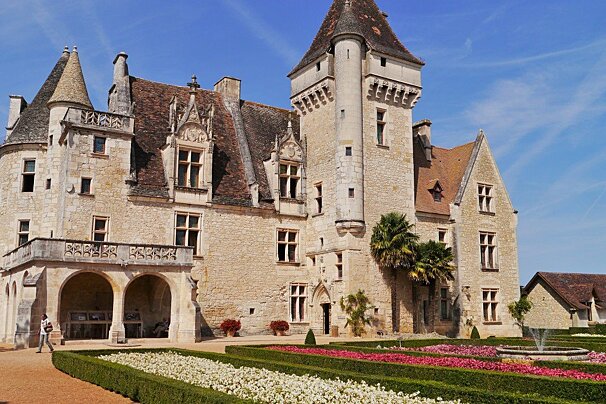
The hotel is run by the Blanchet family who originally decided to open the property as a restaurant, but it ended up growing into much much more. Now a stylish property that offers a pleasing contrast between old stone work from the old building and modern day textures and furnishings.
There are a total of 15 rooms to choose from with a configuration to suit all. Each has been uniquely designed and feature en suite bathrooms and satellite TV.
The hostellierie can accommodate meetings and seminars with a fully equipped conference room with projectors and computer screens.
After a long days exploration, you can wind down in the garden by the pool or relax in the indoor hot tub.
Set inside the hotel gardens, the pool is a great spot to wind down and go for a dip. It is surrounded by sun loungers and parasols where you can dry off, read a book and take in your surroundings.
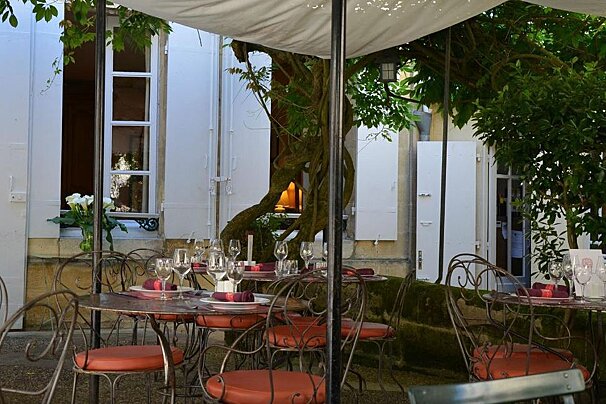
Being the original source of inspiration to set up the business, it is no surprise that there is a quality restaurant on site. You can dine inside or out on the atmospheric terrace next to the garden and enjoy a bottle of wine from their fine selection. The food takes inspiration from local produce and delicious dishes are prepared with modern French techniques.
All children are welcome and those under the age of 5 may stay for free when using an existing bed or cot.
In true French style Le Petit Train will take you on your short journey from the bottom of Rocamadour to the town centre above you.
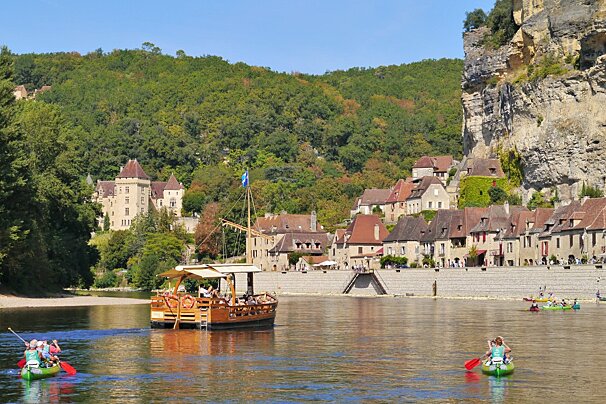
This area provides water-sports for all ages. Renowned for its architectural heritage and sites of natural beauty, you will find that paddling is a great way to relax and have fun whilst enjoying the scenery.
Discover the historic town of Bergerac during this 30-35 minute tour of the towns most famous sights and features.
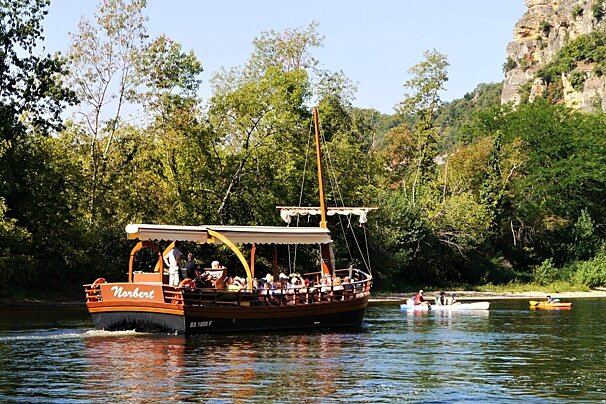
Offering various routes along the Dordogne river to enjoy the sights of the Perigord Noir region. Discover hidden treasures during a relaxing journey down the river.
From tree climbing to paintballing and even via ferrata, the Foret des Ecureuils Adventure Park has plenty of offer all ages.
Passing under the limestones cliff of Beynac you will travel along the Dordogne valley to Marqueyssac and the hanging gardens, Chateau de Fayrac and Chateau de Castelnaud.
The dining rooms allow for views of the surrounding vineyards and rolling hills. Drinks can also be enjoyed in the small library or among the chestnut trees.
This elegant and sophisticated two Michelin star restaurant offers creative dishes designed by chef Cédric Béchade, who plays with colours and textures in his cuisine.
In a dining room graced with elegance and class, you can savour a meal while looking out to the surrounding Lay Valley, vineyards and Chateau gardens. Internationally renowned, the 1 michelin star restaurant serves up refined cuisine based on the superior produce of the region.
Located 50 yards from the Vieux Logis Hotel, the Bistrot de la Place has exposed wooden beams, simple yet effective place settings and makes you feel immediately comfortable in the fuss free, cosy setting in the centre of Trèmolat.
At this Michelin-starred restaurant, the chef, Jean-Baptiste Fabre, will introduce you to authentic cuisine based on the taste and flavours of seasonal produce. The restaurant has an exceptional position, offering a panoramic view of the 18th century medieval village of Pujols.
Converted mill located in a small village typical of the area. Set on the banks of the Aveyron, sit back and watch the heron fish whilst you enjoy your meal.
Originally built in the 12th century, this château was transformed in the 14th century into an impregnable fortress with the support of Pope Clement V and his nephew and namesake, Bertrand de Got, then owner of the château. In the 17th century, it was enhanced even further, losing its defensive aspects but gaining stables, formal gardens ad a new reception rooms. Though its interior is a little sparse, you can see the original bakery, some impressive ceremonial rooms and its pretty inner courtyard. It holds festive cultural events throughout the year.
This pretty church in the minute village of Allemans-du-Dropt originally dates to the 10th century, though there have been many changes and additions over the years. The reason for visiting it to see its frescoes which date to the 15th century and are in impressively good condition. They feature the Last Supper, Crucifixion, Last Judgement and a rather grim view of Hell.
Situated in one corner of the main square in Sainte-Foy-la-Grande, facing the Mairie (town hall), this church has an imposing steeple that reaches high about the streets.
The remains have been partly excavated (only about a tenth) and are a magnificent archaeological example.
Now privately owned by restoration aficionados Catherine and Jacques Guyot, this castle has been partially restored and opened for the public to enjoy.
A magical world located in the heart of the 'Purple Perigord', hosted by the fairy mothers and created from fields of maize you can lose yourself here for hours.
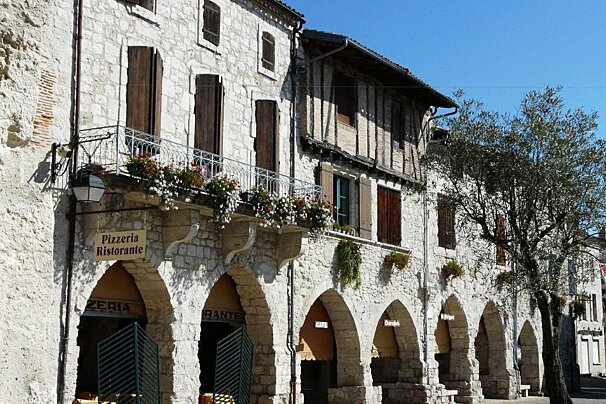
Very much a textbook bastide village, it's laid out in a grid fashion around a central square. Eymet, as it exists today, was founded by Alphonse de Poitiers in 1270.
Sainte-Foy-la-Grande sits on the south bank of the Dordogne river. This attractive walled bastide town still has some of its medieval houses and is a good base for visiting the surrounding Sainte-Foy-Bordeaux wine region and nearby Château de Montaigne, home of Michel de Montaigne.
You get a sense of this town's history as soon as you arrive, with are flags and coats of arms lining the roads that lead you to the main square.
The largest town in the area, Bergerac, still retains a quaint old feel, with a change in pace in the summer months.
Vineyards were planted around this old town in Roman times and whilst most people associate the name with the wine, the town itself is worth a visit for its ramparted old centre with interesting Romanesque churches and an incredible underground monolithic church.
Couze used to be a paper-making village and a number of its old mills are still in existence, using the power of the Couze river to turn the water wheel.