Les Sangliers de Mortemart, near Le Bugue
This is a great outing for a family as you will have the chance to see these magnificent wild boar in a natural environment where they forage and feed in the forests of oak and chestnut trees.


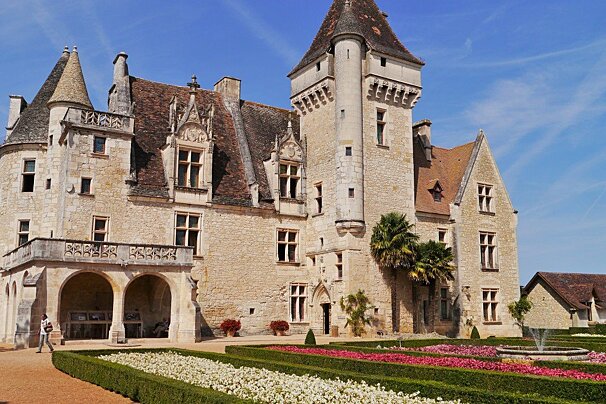
Former summer residence of the bishops of Tulle
From the early 11th century, this castle was coveted by several turbulent lords. It then became the summer residence of the bishops of Tulle, and successively had to endure the wars of religion followed by those of the French Revolution.
It was converted into a Hotel-Restaurant in the late 1920s. By becoming a traditional hotel and restaurant, the castle has lost none of its charm of yesteryear. The rooms are classically decorated and they have a good restaurant with fantastic views from its terrace.
Each of the rooms and suites are air conditioned, and equipped with a hair dryer, mini-bar, flat screen TV, free WiFi, safe and a selection of welcome products.
This is a great outing for a family as you will have the chance to see these magnificent wild boar in a natural environment where they forage and feed in the forests of oak and chestnut trees.
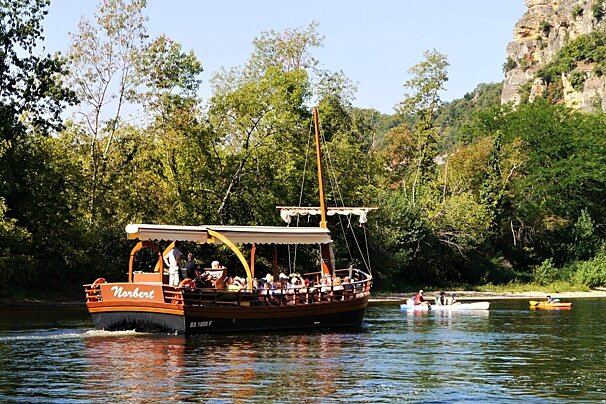
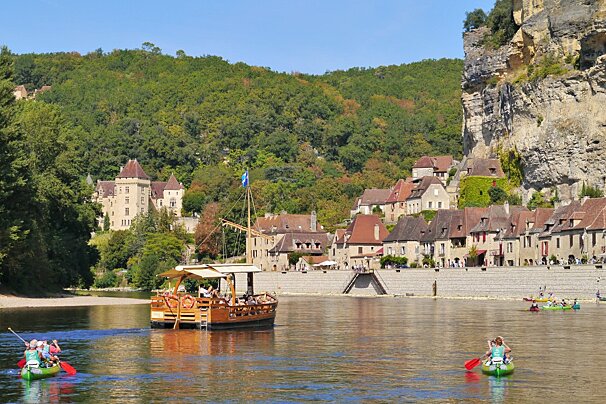
This traditional wooden barge will take you on a picturesque cruise down the river Dordogne from La Roque-Gageac to the Castelnaud bridge.

Take this opportunity to drive the electric replicas of real boats: tug, trawler, ferry, steam Mississippi barges...The small port has everything for those who want to go out there and play sailor "for real".

Shortly before sunset, or at dawn, following the preparation of the flight you can take off with Lionel, a professional balloonist and paraglider who has been working as a guide in Dordogne for more than 15 years.

A full day tour for those interested in wine, the terroir, the makers and other local products of the Dordogne region.

In the heart of the 'Purple Perigord' you can share and enjoy the passion of owner Jean-Pierre who has been part of competitive karting since the late 1980's.

The dining rooms allow for views of the surrounding vineyards and rolling hills. Drinks can also be enjoyed in the small library or among the chestnut trees.

This elegant and sophisticated two Michelin star restaurant offers creative dishes designed by chef Cédric Béchade, who plays with colours and textures in his cuisine.

Set in the hotel's 19th Century building, the dining room has wonderful stone walls and comforting, traditional table settings. Weather permitting, you may be able to relish your meal outside on the flowery terrace overlooking the lush garden or even down by the pool.

This restaurant offers various possibilities for dining in the same place: a fine restaurant serving modern French cuisine, a bistro with local and seasonal dishes, and a tea room. There is also a beautiful sunny garden overlooking the vineyards.

Large bright dining rooms and a flowery terrace set the scene for a delicious meal. In the winter your food can be enjoyed in front of the large open fire place and in the summer, out on the open terrace looking out over town and surrounding countryside.

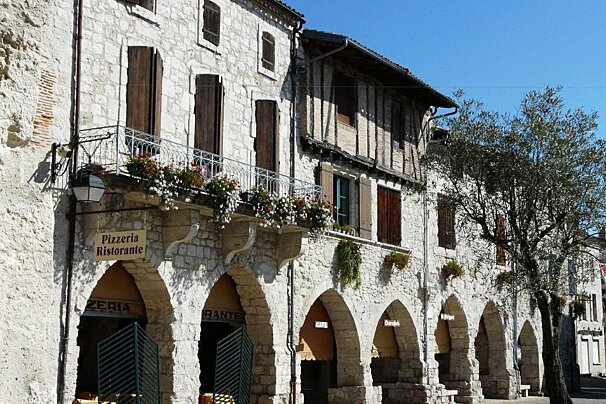
In conjunction with the Hôtel Edward 1er, you would expect the restaurant to maintain the high standards and quality that the hotel upholds. That it certainly does, with twists on French classics in a spacious and friendly dining area, set inside an historical stone building, typical of the Monpazier village and surrounding region.

Accessed today by a small electric train, these caves were discovered in 1902 by Armand Vire and at the time required a descent of over 60 metres.

Also known as the Truffle train, it will take you on a journey of 8 miles (13 Km) round trip, more than 80 meters (260 feet) high cliff, giving a wonderful panorama of the Dordogne Valley.

The Palais de la Raymondie stands next to the market hall in the heart of the medieval town of Martel. This museum contains objects dating from paleolothic, neolithic and Gallo-Roman occupations.
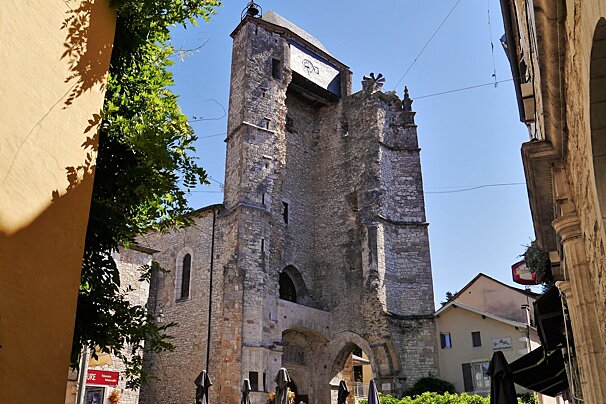
Standing near the Porte Barnicou (one of the five gates to the walled city), this 12th-century church was rebuilt in the late 15th-century and remodeled once again in the 17th-century.
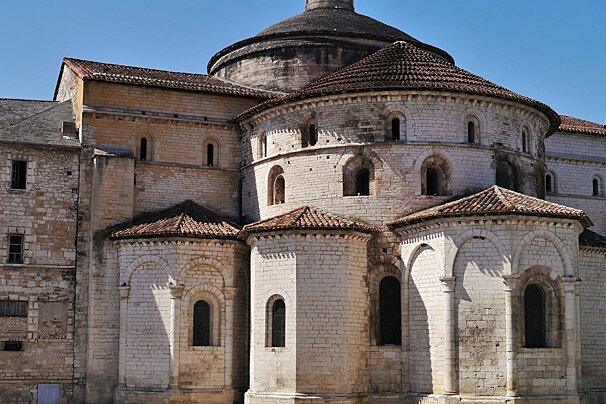
Built between 1075 and 1150, the Abbey Sainte-Marie ranks among the finest examples of Romanesque and Byzantine architectural styles in the south-west of France.

A unique collection of animated toys, statues and displays from the 19th century, that are still featured in society today in Christmas shop windows.

The town of Martel is not, in fact, famous for the brandy (that's Martell with two ll's) but is well known as the capital of truffles and a great producer of walnuts, two of the region's specialities.
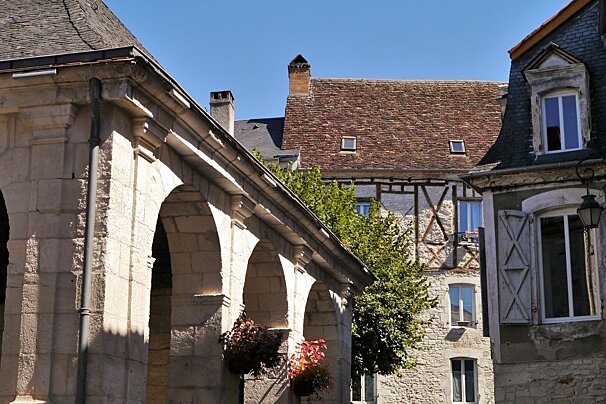
A base for exploring the region, Souillac has a medieval past and is filled with Romanesque-style sculptures.

Perched on the side of a cliff, in a gorge above the river Alzou, this medieval town has a breathtaking setting.

Carennac has been previously voted 'One of the 'Most Beautiful Villages in France' and it's easy to see why. The blonde stone and red-brown roofs of its buildings have tall chimneys and are adorned with creepers that turn red in the autumn.

Picturesque village typical of Quercy. The traditional houses have corbelled fronts, brown-tiled roofs and pigeon lofts built into their walls.

This medieval town on a bend in the Dordogne grew around its 9th century Benedictine abbey of Saint-Pierre.