Aqua Park Bergerac, Bergerac
Open from June to the end of September this small waterpark offers you and your family the chance to cool off on the hot summer days and to keep children entertained for hours.
5 bedroom Villa in Dordogne. Sleeps 14
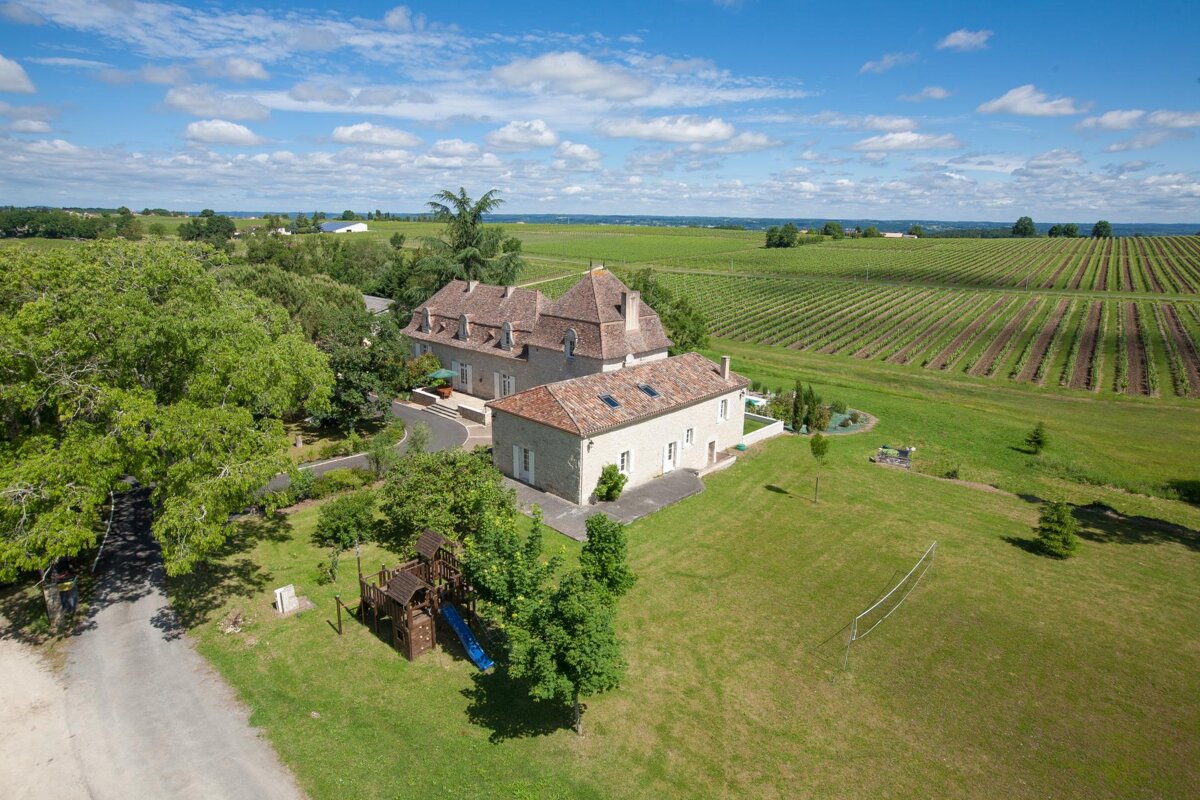
A beautiful property owned by a local viticulturist whose vineyards form part of the grounds around the house.
To the south of Bergerac, amidst the rolling countryside, lies Le Manoir du Vignoble, a charming haven set within a landscape of pretty villages and fields of vines. The vineyards here are integral to the scenery and the local way of life.
The façade of the manor is an elegant blend of pale stone walls and a steep, tiled roof made from original local tiles in warm hues of burnt sienna, rust, and brown. Dormer windows framed in stone complete the impressive exterior. The front of the house faces a circular driveway, centred by a lawned area dotted with trees. Stone steps lead up to a small terrace and the main entrance.
Inside, the grandeur continues with high beamed ceilings and exposed stone walls that create a sense of spaciousness and history throughout the ground floor. The tall stone fireplaces, reminiscent of those in chateaux, add to the atmosphere, found in the dining room, living room, and kitchen.
A vaulted underground den has been transformed into a cosy spot for billiards, while a large reception/games room with a kitchenette and living area provides ample space for relaxation. French windows open onto the grounds, where the surrounding landscape invites exploration.
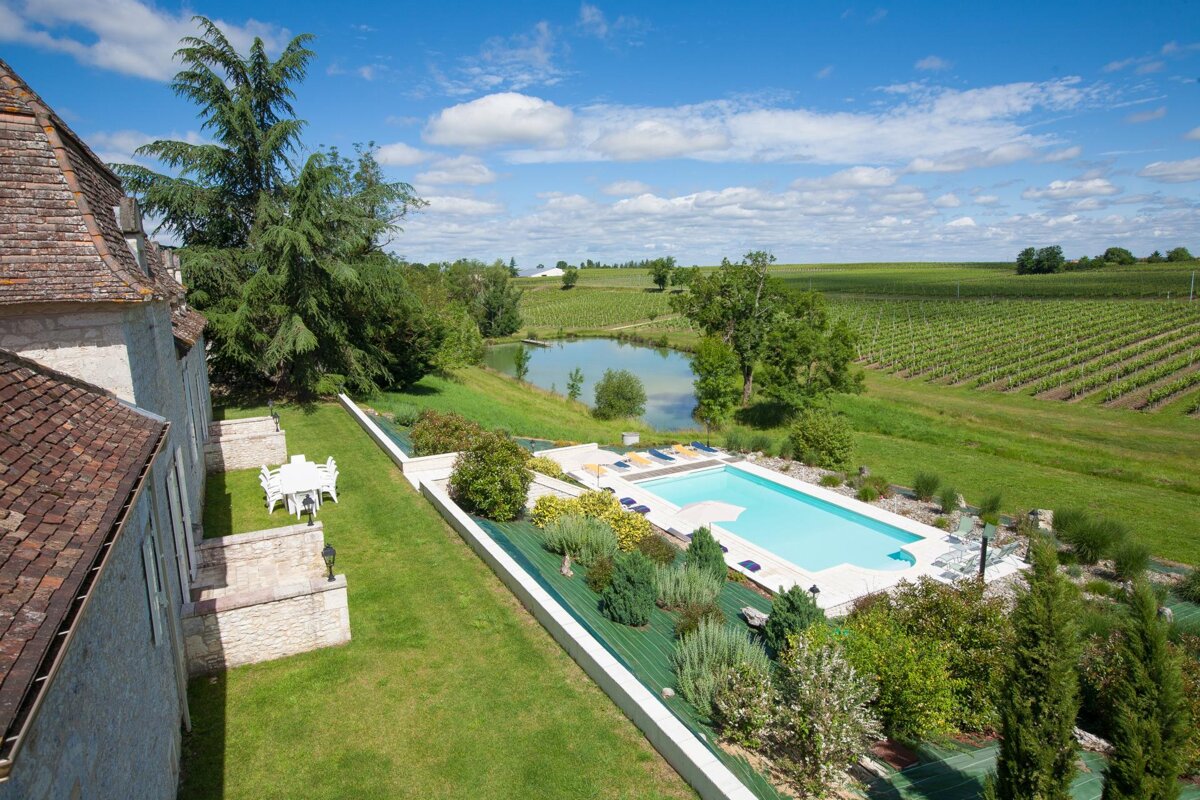
The rear of the property features steps leading down to the pool area, perfectly positioned to offer expansive views of the vineyards and rolling countryside. A small lake within the grounds also provides an idyllic setting for a peaceful retreat, with fishing allowed.
The town of Sigoules (4km) offers essential amenities, while Bergerac (12km), situated along the banks of the River Dordogne, boasts an old port where you can take scenic boat trips. Cobblestone streets lead into the vieille ville, where charming half-timbered buildings adorned with flowers house a variety of cafés, restaurants, and shops. Scenic routes through the countryside also take you to picturesque villages like Issigeac, Monbazillac, and Eymet.
Private heated swimming pool (12m x 6m) with Roman steps.
Open from June to the end of September this small waterpark offers you and your family the chance to cool off on the hot summer days and to keep children entertained for hours.
Aerial adventures including treetop ladders, zip lines, cave routes and rocks faces to climb. This adventure park offers a mix of everything to keep the whole family entertained.
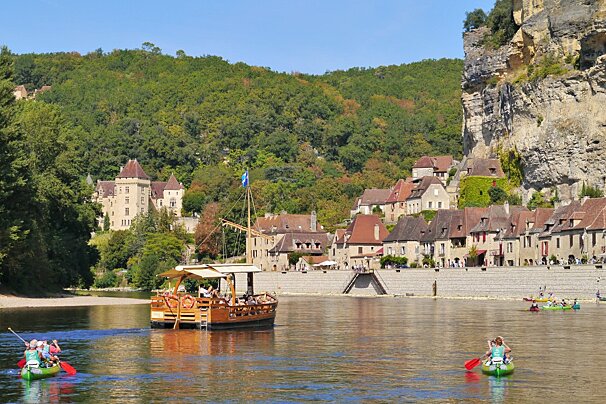
Enjoy a relaxing day close to nature as you canoe along the river and explore the waterways of this UNESCO World Biosphere Reserve.
The glass lift with panoramic views, housed within the old Church Sainte-Marie’s bell tower offers a unique experience. Once at the top, the lift, whose walls are made entirely of glass, allows you a 360° view of Sarlat.
A trip on a petit train is the perfect way to see this small bastide town and to learn a little more about the long history of the bastide town.
After discovering the city of Saint Emilion this train tour takes you out into the countryside and surrounding vineyards to discover more about the history and culture of wine in this region.
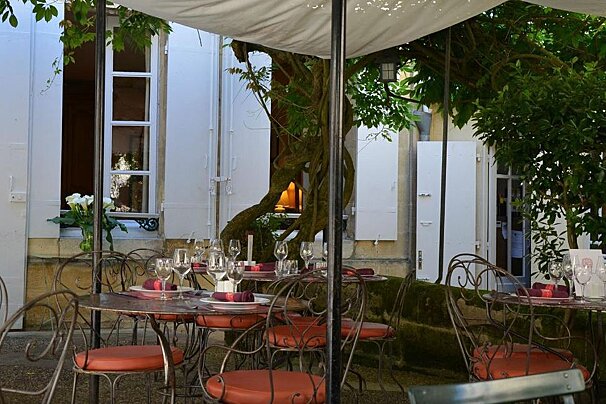
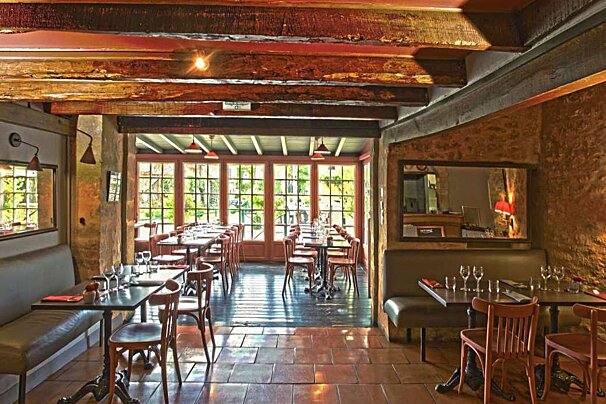
The dining rooms allow for views of the surrounding vineyards and rolling hills. Drinks can also be enjoyed in the small library or among the chestnut trees.
This elegant and sophisticated two Michelin star restaurant offers creative dishes designed by chef Cédric Béchade, who plays with colours and textures in his cuisine.
Located in the world capital of the truffle, at this small hotel, the truffle has become the main feature.
The restaurant boasts an innovative menu with a focus on fine local fare and seemless service. The very word Les Merles stands for honesty and delightfulness, which is reflected throughout the dining experience.
With their very own garden, the restaurant has access to the freshest fruit, vegetables, edible flowers and herbs. This is reflected in the menu, which makes the most of the regions famous culinary delights, including foie gras and of course Perigords black diamond, the truffle. You will easily settle into the cosy, contemporary restaurant or get to enjoy your surroundings while dining out on the terrace.
This restaurant in the old guard rooms of the Château du Viguier Royal, makes this old mansion-house kitchen alive again. The chef, Daniel Authié, creates cooking art which mixes contemporary and traditional flavours. The sommelier and head waiter, Bernard Badia, offers helpful advice on the food characteristics and complementary wines.
Now privately owned by restoration aficionados Catherine and Jacques Guyot, this castle has been partially restored and opened for the public to enjoy.
A magical world located in the heart of the 'Purple Perigord', hosted by the fairy mothers and created from fields of maize you can lose yourself here for hours.
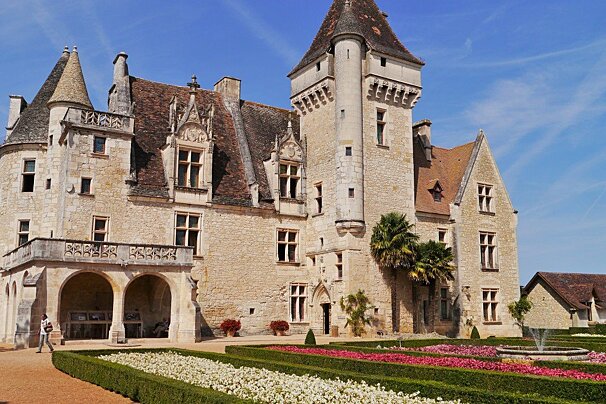
This 16th-century château combines medieval defensive fortifications and Renaissance exuberance.
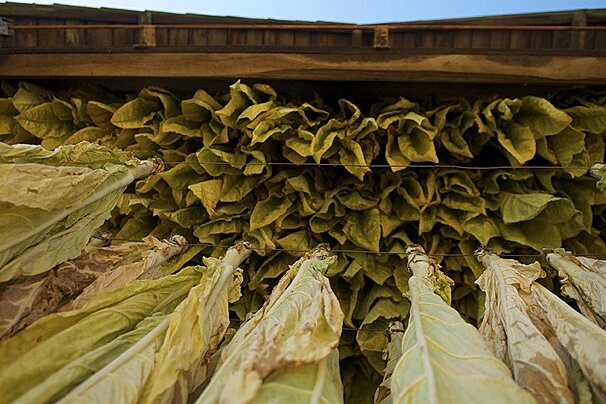
Housed in the Maison Peyrarède, the tobacco museum in Bergerac tells the 4,000 year history of tobacco growth in the region when it used to be a major crop.
The Wine Centre (Maison des Vins) is right in the historic heart of Bergerac, in the Récollets Cloisters, a magnificent group of monastic buildings from the 17th-century.
The creation of Wine and River Transport Museum (Musee du Vin & de la Batellerie ) tells us about the heritage and history of the Dordogne River that runs through the heart of Bergerac.
The largest town in the area, Bergerac, still retains a quaint old feel, with a change in pace in the summer months.
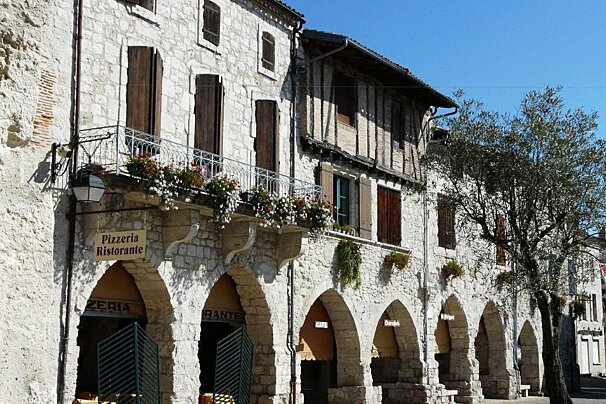
Very much a textbook bastide village, it's laid out in a grid fashion around a central square. Eymet, as it exists today, was founded by Alphonse de Poitiers in 1270.
Sainte-Foy-la-Grande sits on the south bank of the Dordogne river. This attractive walled bastide town still has some of its medieval houses and is a good base for visiting the surrounding Sainte-Foy-Bordeaux wine region and nearby Château de Montaigne, home of Michel de Montaigne.
Couze used to be a paper-making village and a number of its old mills are still in existence, using the power of the Couze river to turn the water wheel.
Founded in 1261, Lalinde was the first English bastide. Situated on the banks of the Dorgdogne, the town is also crossed by the Canal de Lalinde, constructed to bypass the dangerous rapids of Grand Thoret.
Trémolat was originally home to a 6th century hermit, Saint-Cybard, before monks built their monastery here in the 9th century.